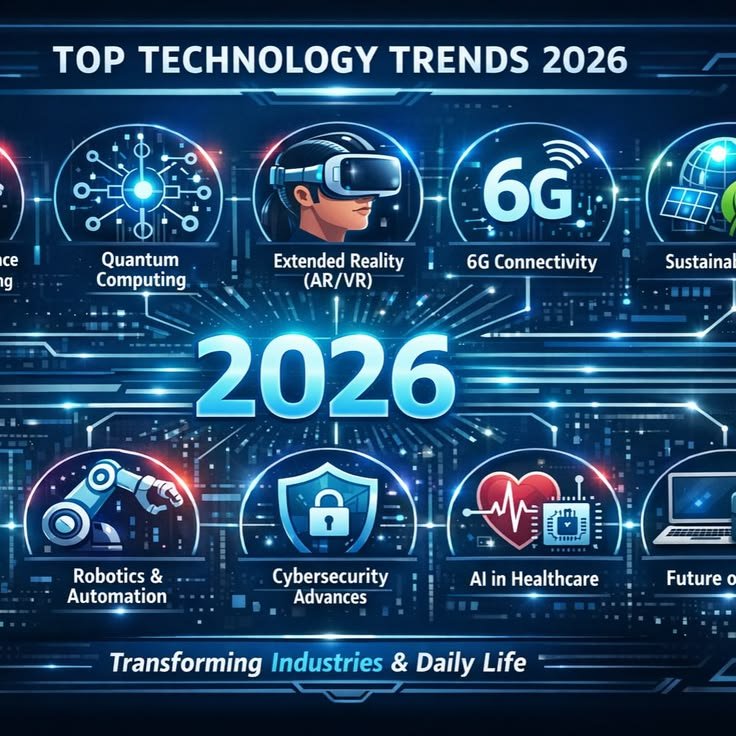
Technology continues to evolve at an extraordinary pace, transforming the way people work, communicate, shop, travel, and interact with the digital world. From artificial intelligence and smarter devices to cybersecurity and next-generation connectivity, 2026 is bringing major changes across the technology landscape.
For consumers and businesses alike, staying informed about these developments is becoming increasingly important. Here are some of the biggest technology trends shaping the industry today.
Artificial Intelligence Is Becoming More Practical
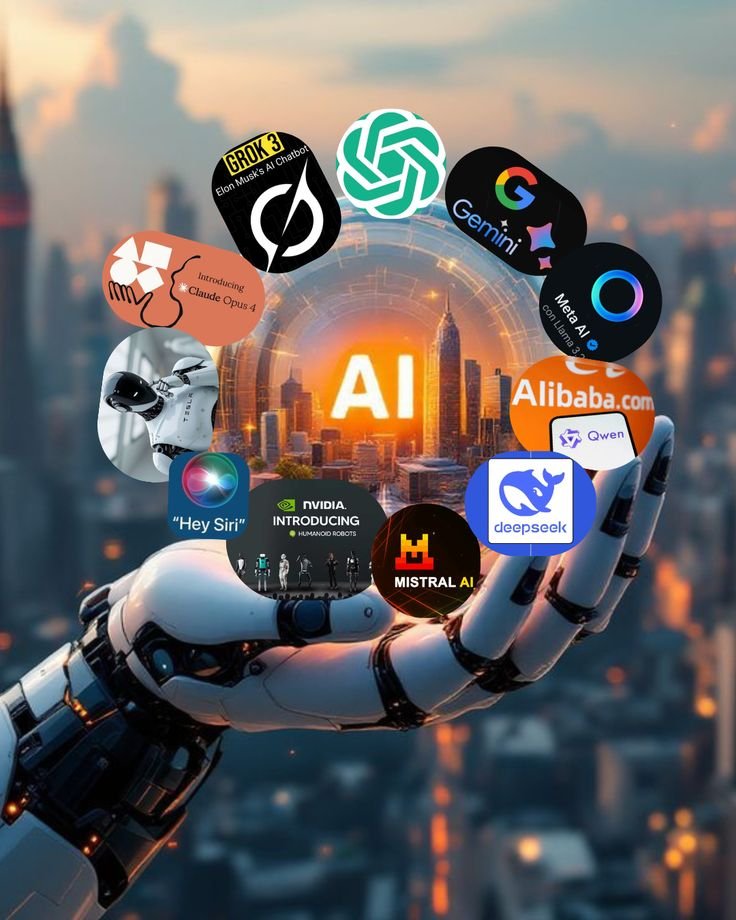
Artificial intelligence remains one of the most important areas of technological development. While earlier AI tools often focused on answering questions or generating content, newer systems are increasingly designed to perform useful tasks and assist users across multiple stages of their daily workflows.
AI-powered assistants can help summarize information, organize tasks, analyze documents, generate ideas, and support software development. Businesses are also exploring AI for customer service, data analysis, marketing, cybersecurity, and automation.
However, the rapid adoption of AI also raises important questions about privacy, accuracy, copyright, employment, and responsible use. As the technology develops, companies and governments are paying greater attention to how AI should be deployed safely and transparently.
Smartphones Are Getting Smarter
The smartphone remains one of the most important consumer technology products, but manufacturers are increasingly focusing on meaningful improvements rather than simply adding new specifications.
Modern smartphones are becoming more capable in areas such as photography, battery management, on-device AI, security, and connectivity. AI-powered features can improve image processing, assist with communication, summarize information, and provide more personalized experiences.
Camera technology is also continuing to advance. Computational photography allows smartphones to combine software and hardware capabilities to produce better images in difficult lighting conditions. At the same time, improvements in displays, charging technology, processors, and energy efficiency are helping create more capable mobile devices.
Fold able smartphones are another area receiving attention. Manufacturers continue to experiment with flexible displays and new form factors, giving consumers alternatives to traditional smartphone designs.
Wearable Technology Continues to Expand
Smartwatches and other wearable devices are becoming increasingly sophisticated. Beyond notifications and fitness tracking, many wearable now provide users with detailed information about activity, sleep, heart rate, and other wellness-related measurements.
The broader wearable market is also expanding beyond watches. Wireless earbuds, smart glasses, fitness trackers, and other connected devices are becoming part of the everyday technology ecosystem.
Smart glasses are particularly interesting because they could provide information without requiring users to constantly look at a smartphone. Although widespread adoption will depend on factors such as battery life, comfort, price, privacy, and available applications, the category continues to attract significant interest.
Cybersecurity Is More Important Than Ever
As more personal and business activities move online, cybersecurity has become a critical technology priority.
Cyberattack can target individuals, businesses, governments, and critical infrastructure. Common threats include phishing, malware, identity theft, ransomware, and attempts to gain unauthorized access to accounts and systems.
Artificial intelligence is influencing cybersecurity on both sides. Security teams can use AI to identify unusual activity and analyze large volumes of data, while attackers may also use automated tools to create more convincing scams and attacks.
For everyday users, basic security practices remain important. Using strong and unique passwords, enabling multi-factor authentication, keeping software updated, and being cautious with unexpected messages can significantly improve digital security.
Cloud Computing Keeps Growing
Cloud computing continues to provide the foundation for many modern digital services. Instead of relying entirely on local hardware, organizations can use cloud platforms to store information, run applications, analyze data, and scale their computing resources.
The growth of AI is also increasing demand for cloud infrastructure. Training and running advanced AI models can require substantial computing power, creating new demand for specialized processors and large-scale data centers.
At the same time, companies are exploring ways to make computing more efficient. Energy consumption, cooling requirements, and infrastructure costs are becoming important considerations as digital services continue to expand.
The Rise of Edge Computing
While cloud computing remains important, more processing is also moving closer to where data is generated. This approach, commonly known as edge computing, can reduce delays and decrease the amount of information that needs to travel to centralized servers.
Edge computing can be particularly useful for connected vehicles, industrial equipment, smart cities, security systems, and other applications where fast responses are important.
The combination of cloud and edge computing could create a more flexible digital infrastructure in which some tasks are handled locally while more complex workloads are processed in centralized data centers.
Robotics Is Moving Into New Areas
Robotics is another field experiencing rapid development. Robots are increasingly being tested and deployed in manufacturing, warehouses, logistics, healthcare, agriculture, and other industries.
Advances in AI, computer vision, sensors, and machine learning are helping robots operate in more complex environments. Humanoid robots are also receiving increased attention, with companies exploring whether machines with human-like forms could eventually perform a broader range of physical tasks.
However, significant technical and economic challenges remain. Reliability, safety, cost, energy efficiency, and the ability to operate effectively in unpredictable environments will all influence how quickly advanced robots become common.
Connectivity Is Becoming More Advanced
Connectivity continues to improve through developments in mobile networks, We-fie, satellite communications, and other technologies.
Faster and more reliable connectivity can support applications ranging from high-quality video communication to connected vehicles and industrial automation.
Satellite-based connectivity is also attracting attention because it can potentially provide communication services in areas where traditional infrastructure is limited. As networks become more capable, the distinction between online and offline environments will continue to shrink.
Technology Is Becoming More Personal
One of the most noticeable trends across the technology industry is professionalization. Devices and software are increasingly designed to adapt to individual users.
AI can analyze preferences and context to provide more relevant recommendations, automate repetitive tasks, and customize digital experiences. Smartphones, computers, smart-home devices, and wearable can also work together as parts of a connected ecosystem.
The challenge will be balancing convenience with privacy. The more personal information technology systems process, the more important responsible data management becomes.
What Should Consumers Expect Next?
The technology industry is moving toward systems that are more intelligent, connected, automated, and personalized. AI will likely remain at the center of many of these developments, while smartphones, wearable, robotics, cloud computing, cybersecurity, and connectivity will continue evolving alongside it.
For consumers, the most important change may not be a single revolutionary device. Instead, it may be the gradual integration of different technologies into everyday life.
The future of technology will depend not only on what companies can build but also on how responsibly these innovations are designed and used. Privacy, security, accessibility, affordability, and sustainability will remain important considerations as digital technology becomes even more deeply integrated into society.
Final Thoughts
Technology in 2026 is developing across multiple fronts simultaneously. Artificial intelligence is becoming more practical, smartphones and wearable are becoming smarter, cybersecurity is becoming increasingly important, and robotics and advanced connectivity are opening new possibilities.
For consumers and businesses, understanding these trends can make it easier to navigate an increasingly digital world. The technology landscape will continue to change rapidly, and the biggest developments may come from the way different technologies work together rather than from a single breakthrough.
One thing is certain: technology is no longer simply changing individual devices. It is reshaping how people interact with information, businesses, and the world around them.