
Artificial intelligence is becoming a part of everyday life, from smartphones and smart cameras to cars, industrial machines, and wearable devices. While cloud computing has played a major role in the growth of AI, a new approach is changing how intelligent systems operate. This technology is known as Edge AI, and it is becoming increasingly important in 2026.
Edge AI allows devices to process artificial intelligence tasks locally instead of sending every piece of information to a distant cloud server. As a result, devices can respond faster, operate with less dependence on an internet connection, and handle sensitive information more efficiently. From intelligent smartphones to connected homes and advanced vehicles, Edge AI is helping create a faster and more responsive digital world.
What Is Edge AI?
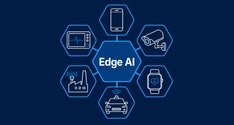
Edge AI combines artificial intelligence with edge computing. Traditional cloud-based AI often sends data to remote servers for processing. The results are then sent back to the device. Edge AI moves at least part of this processing directly onto the device or a nearby edge system.
For example, a smart security camera using Edge AI can recognize movement, detect objects, or identify unusual activity without continuously uploading video to the cloud. Similarly, a smartphone can use an AI model locally to improve photographs, translate speech, or provide personalized features.
This approach reduces the distance between the device and the computing power it needs. Therefore, AI applications can become faster, more efficient, and more practical for everyday use.
Why Edge AI Matters in 2026
Cloud computing remains important, but sending every task to the cloud can create delays and require constant connectivity. Edge AI addresses some of these challenges by allowing devices to make decisions locally.
In 2026, advances in AI chips, neural processing units, efficient machine-learning models, and device hardware are making local AI more capable. These improvements are helping manufacturers build smaller and more powerful intelligent devices.
Faster AI Responses
One of the biggest advantages of Edge AI is speed. When data is processed locally, the device does not always need to communicate with a remote server before producing a result.
This can be especially useful for applications where milliseconds matter. Autonomous systems, industrial robots, smart cameras, and driver-assistance technologies can benefit from faster decision-making.
For example, an intelligent vehicle can analyze information from cameras and sensors locally. A faster response can help the system react to changing road conditions without relying entirely on an internet connection.
Edge AI and Smartphones
Smartphones are becoming powerful AI platforms. Modern mobile processors increasingly include dedicated hardware for AI workloads, allowing phones to perform sophisticated tasks directly on the device.
Edge AI can improve photography by recognizing scenes, enhancing images, reducing noise, and adjusting camera settings automatically. It can also support voice recognition, language translation, text generation, image processing, and personalized recommendations.
Another important benefit is that some AI functions can continue working even when internet access is limited. This makes smartphones more useful in areas with weak or unreliable connectivity.
Smarter Smart Homes
The smart home industry is another area where Edge AI can make a major difference. Smart cameras, speakers, thermostats, doorbells, appliances, and security systems can use local intelligence to understand their surroundings.
For example, an Edge AI-powered camera could distinguish between a person, a pet, and ordinary background movement. A smart thermostat could learn household patterns and adjust temperature settings based on local sensor information.
Because some information can be processed locally, smart-home systems may reduce the amount of personal data that needs to be continuously transmitted to cloud services.
Edge AI in Healthcare
Healthcare is increasingly becoming connected and data-driven. Wearable devices can monitor activity, heart-related measurements, sleep patterns, and other signals. Edge AI can help analyze certain types of data directly on these devices.
Local processing can provide faster feedback and reduce the need to send every measurement to a remote server. For example, a wearable device could identify an unusual pattern and notify the user or healthcare system when appropriate.
However, healthcare applications require strong accuracy, privacy, security, and regulatory safeguards. Edge AI can support healthcare technology, but it does not remove the need for professional medical evaluation and carefully validated systems.
Edge AI and Autonomous Vehicles
Vehicles are becoming increasingly intelligent. Modern cars can use cameras, radar, sensors, and other systems to understand their surroundings.
Edge AI is particularly useful because vehicles need to process information quickly. A car cannot always depend on a remote cloud connection when responding to an object or changing road condition.
Local AI processing can support driver-assistance features such as object detection, lane recognition, parking assistance, and traffic analysis. As vehicle technology develops, Edge AI is expected to remain an important part of intelligent transportation systems.
Improving Privacy and Data Protection
Privacy is one of the major reasons organizations are interested in Edge AI. Sending large amounts of personal information to cloud servers can create additional privacy and security considerations.
With local processing, some information can remain on the device. For example, a smartphone may process a voice command locally without sending the complete audio recording to a remote server.
This does not mean Edge AI automatically guarantees privacy. Devices still need strong security, encryption, software updates, access controls, and responsible data practices. Nevertheless, local processing can reduce unnecessary data movement.
Edge AI in Business and Industry
Businesses are also exploring Edge AI to improve efficiency. Manufacturing facilities can use intelligent cameras and sensors to monitor equipment, identify defects, and detect unusual operating conditions.
Instead of sending every sensor reading to a centralized system, edge devices can analyze information locally and send only important results. This can reduce network traffic and support faster responses.
Retail businesses can also use Edge AI for inventory monitoring, customer-flow analysis, smart checkout systems, and operational automation. These applications can help organizations make better use of real-time information.
The Role of AI Chips
The growth of Edge AI depends heavily on specialized hardware. Traditional processors can perform AI tasks, but dedicated AI accelerators and neural processing units are designed to handle machine-learning workloads more efficiently.
Modern devices increasingly include hardware that can process AI models while balancing performance, power consumption, and battery life.
As chip technology improves, more AI capabilities can move from large data centers into everyday products. This is one of the key developments supporting the expansion of Edge AI in 2026.
Challenges Facing Edge AI
Despite its benefits, Edge AI also has challenges. Running advanced AI models on small devices can require significant computing power and memory. Developers must optimize models so they can operate efficiently without consuming excessive battery or hardware resources.
Security is another concern. AI models running on physical devices can potentially become targets for attacks or manipulation. Manufacturers therefore need strong security measures and regular software updates.
There are also challenges related to model accuracy, compatibility, device costs, and responsible AI development. Companies must balance innovation with reliability, privacy, and user safety.
The Future of Edge AI
The future of Edge AI is closely connected to the growth of intelligent devices. As AI models become more efficient and hardware becomes more powerful, local AI processing is likely to appear in more products.
Wearable may become better at understanding personal activity. Vehicles may process more information locally. Smart-home systems may become more responsive. Industrial machines may detect problems earlier. Smartphones may offer increasingly advanced AI capabilities without depending on cloud processing for every task.
Edge AI could also work together with cloud AI rather than completely replacing it. Devices can handle time-sensitive or privacy-sensitive tasks locally, while cloud systems can provide large-scale computing and model updates when needed.
Conclusion
Edge AI 2026 represents an important shift in how artificial intelligence reaches everyday users. By bringing AI processing closer to the source of data, edge technology can provide faster responses, improved connectivity resilience, and new opportunities for privacy-conscious applications.
From smartphones and smart homes to healthcare, vehicles, and industrial automation, Edge AI is helping transform ordinary devices into intelligent systems. Although challenges such as security, hardware limitations, energy efficiency, and responsible development remain, advances in AI chips and machine-learning technology are making local intelligence increasingly practical.
The future of AI will not exist only inside massive cloud data centers. Increasingly, intelligence will also live inside the devices people use every day. As Edge AI continues to evolve, it has the potential to make technology faster, smarter, more connected, and more responsive to the needs of modern life.