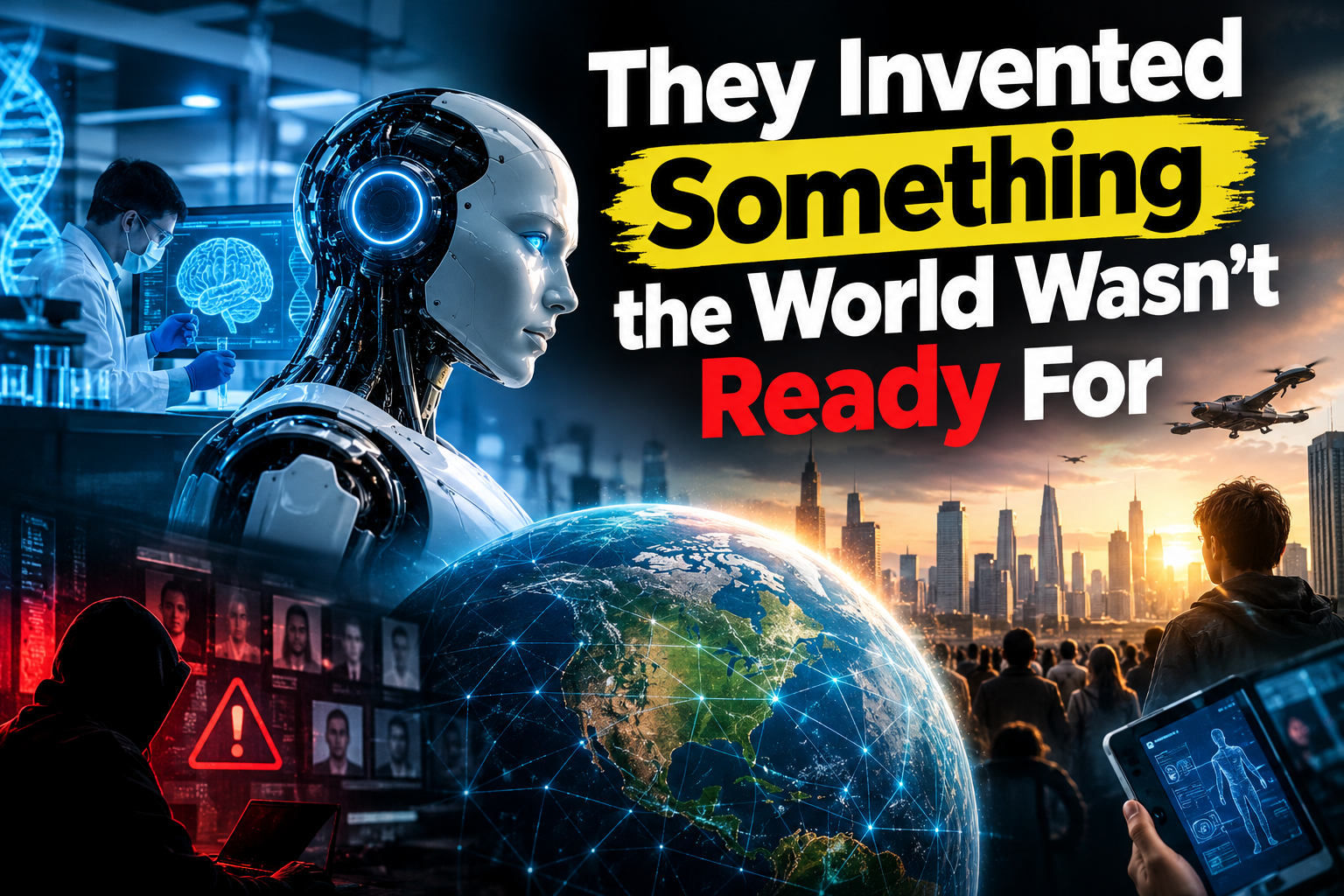
Introduction: When Innovation Moves Faster Than Humanity
Throughout history, humanity has created inventions that completely transformed the way people live, work, and communicate. From the invention of electricity to the development of the internet, every major technological breakthrough has introduced new opportunities while raising unexpected questions. Today, however, innovation is moving at a speed that is difficult to comprehend. Artificial intelligence, humanoid robots, advanced biotechnology, and autonomous machines are pushing the boundaries of what people once considered impossible.
But what happens when technology advances faster than society can understand, regulate, or control it?
Imagine a machine capable of performing complicated tasks in seconds, an artificial intelligence system that can create realistic videos of events that never happened, or a robot that can perform physical work with remarkable precision. These technologies are no longer simply ideas from science fiction. They represent real technological directions that are rapidly developing.
The question is no longer whether technology will change our future.
1. Artificial Intelligence Is Changing Everything
Artificial intelligence, commonly known as AI, is one of the most influential technological developments of our time. Modern AI systems can generate written content, analyze enormous amounts of information, recognize patterns, assist with programming, and create realistic images and videos.
Businesses are using AI to improve productivity, while researchers are exploring its potential in medicine, education, engineering, and scientific discovery.
However, this progress also creates serious challenges.
AI-generated content can imitate human communication and appearance so convincingly that it becomes difficult to distinguish authentic material from fabricated content.
Another concern is employment. As AI systems become more capable, some repetitive or predictable tasks may become automated. Although new careers will emerge, workers may need to develop different skills to remain competitive.
2. Robots Are Moving Beyond Factory Floors
Today, robotics is expanding into more complex environments.
Imagine a future in which robots help elderly people at home, deliver supplies during emergencies, or perform dangerous inspections in places where human workers face serious risks.
These possibilities could improve safety and efficiency.
Yet, the technology is not perfect. Robots still face challenges involving reliability, cost, battery life, dexterity, and understanding unpredictable environments. A machine that performs well in a controlled demonstration may struggle when confronted with unexpected obstacles in the real world.
There are also questions about privacy, accountability, and safety. If an autonomous machine causes an accident, determining responsibility may involve manufacturers, software developers, operators, and organizations using the system.
The future of robotics will therefore depend not only on mechanical progress but also on careful testing and clear safety standards.
3. Technology Is Beginning to Transform Human Biology
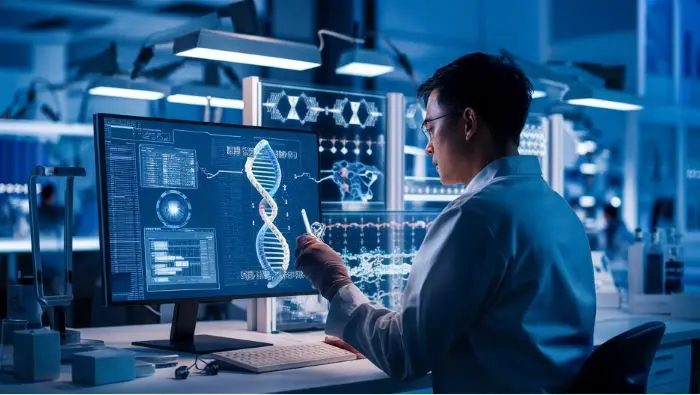
Some of the most remarkable developments are taking place in biotechnology and medical engineering.
Brain-computer interfaces, for example, aim to translate certain patterns of brain activity into commands that can control external devices. Research in this area has demonstrated potential applications for people with paralysis, including assistance with communication or device control.
Meanwhile, gene-editing technologies offer researchers new ways to investigate and potentially treat some genetic disorders. Their clinical use, however, requires rigorous evaluation of safety, effectiveness, and long-term outcomes.
These developments also raise profound ethical questions.
How should society decide which genetic modifications are acceptable? Who should have access to expensive medical enhancements? How can sensitive biological information be protected?
Technology may eventually allow humans to overcome some limitations imposed by disease or injury, but scientific capability does not automatically determine what society should permit.
4. The Invisible Power of Advanced Surveillance
Modern technology can collect, process, and analyze enormous amounts of information. Cameras, connected devices, smartphones, and digital services generate data that can reveal patterns in human behavior.
When used appropriately, these systems can improve traffic management, help identify security threats, and support emergency response. Advanced sensors can also monitor industrial equipment and detect problems before they become dangerous.
However, the same capabilities can create risks when information is collected without meaningful consent or used irresponsibly.
Facial recognition, location tracking, and large-scale data analysis can potentially weaken personal privacy. AI systems may also make incorrect judgments or reproduce biases present in their training data.
The challenge is finding a balance between technological convenience, public safety, and individual freedom.
Strong privacy protections, transparent policies, independent oversight, and meaningful human accountability will become increasingly important as these systems become more sophisticated.
5. The Future of Technology May Be Difficult to Predict
One reason advanced technology can feel unsettling is that its long-term effects are difficult to forecast.
The internet initially appeared to be primarily a way to exchange information. Over time, it transformed commerce, entertainment, education, journalism, and personal relationships. Smartphones similarly became much more than communication devices; they now function as cameras, navigation systems, payment tools, and portable computers.
Artificial intelligence and robotics could follow a similarly broad path, influencing industries that are not yet fully prepared for them.
Some predictions about future inventions will prove accurate, while others will turn out to be exaggerated. Real technological progress usually involves years of research, engineering, experimentation, and improvement rather than a single dramatic breakthrough.
That is why it is important to separate verified achievements from marketing claims and speculative predictions.
A technology may appear revolutionary in a demonstration without being affordable, reliable, or practical enough for widespread use.
Understanding this distinction allows people to remain curious without accepting every extraordinary claim at face value.
6. Are We Ready for What Comes Next?
The biggest challenge may not be inventing more powerful machines. It may be learning how to use them responsibly.
Governments, researchers, technology companies, educators, and ordinary citizens all have a role to play. Developers must consider safety and potential misuse. Policymakers need to establish clear rules without unnecessarily preventing beneficial innovation. Educational institutions must help people develop the technical and critical-thinking skills required in a changing world.
Individuals also need to become more informed digital citizens. Verifying information, protecting personal data, recognizing AI-generated content, and understanding the limitations of automated systems are increasingly valuable skills.
Most importantly, technological progress should be measured not only by what machines can accomplish but also by how much they improve human life.
An invention is not automatically beneficial simply because it is powerful, fast, or impressive. Its real value depends on whether it solves meaningful problems while minimizing harm.
Conclusion: The Future Is Being Built Right Now
They invented something the world wasn’t ready for. That phrase captures both the excitement and the uncertainty surrounding modern technological progress.
Artificial intelligence is expanding what software can accomplish. Robotics is bringing automation into new environments. Biotechnology is opening new possibilities for medicine. Advanced sensors and connected systems are changing how people interact with the world.
These developments could help humanity solve important problems, improve healthcare, increase productivity, and explore possibilities that once seemed unimaginable.
At the same time, they demand careful decisions about safety, privacy, employment, fairness, and responsibility.
The future will not be determined by inventions alone. It will be shaped by the choices people make about how those inventions are designed, distributed, governed, and used.
Perhaps the most important question is not whether humanity is ready for the next great invention. It is whether humanity is willing to prepare for it.
Because the next technology capable of changing the world may already be under development—and the decisions made today could determine whether it becomes one of our greatest achievements or one of our most difficult challenges.