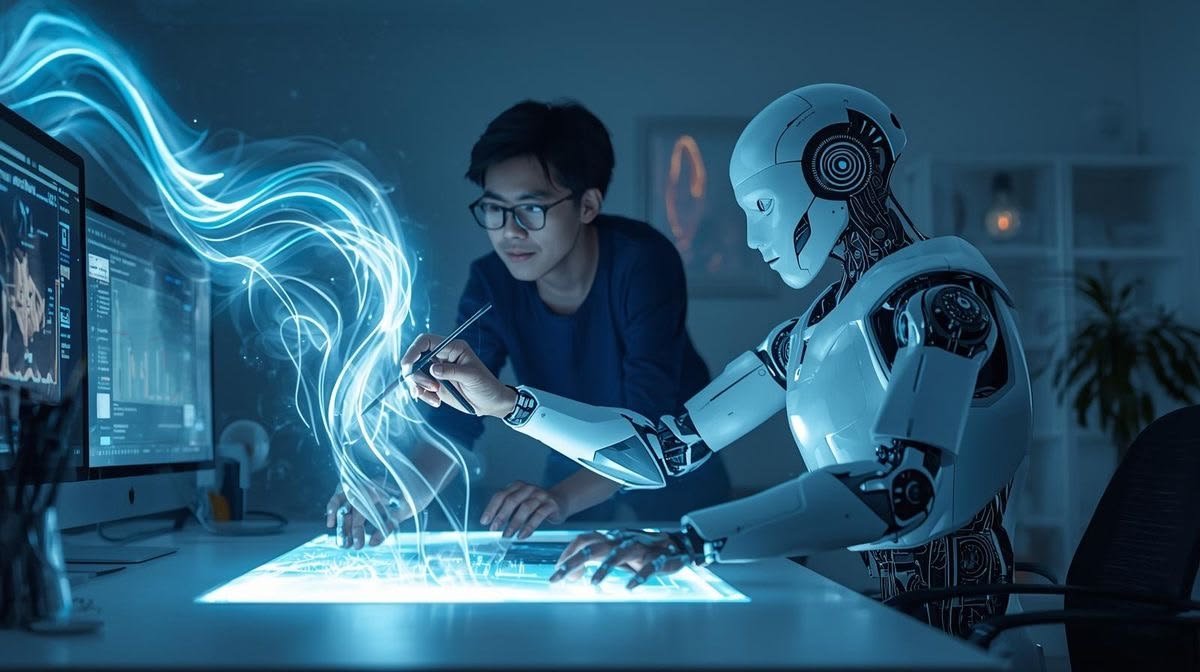
Robotics is entering a new era. For decades, robots were primarily designed to perform repetitive tasks in controlled environments. They could assemble products, move heavy materials, or perform calculations with remarkable precision, but their abilities were limited by strict programming and predictable surroundings.
Today, that picture is changing rapidly. Advances in artificial intelligence, computer vision, machine learning, sensors, and robotics are enabling machines to understand their environments, learn from experience, and adapt to situations they were not specifically programmed to handle.
The result is a new generation of intelligent robots that can increasingly think, adapt, and work in ways that resemble human behavior.
From Programmed Machines to Intelligent Robots
Traditional industrial robots are extremely effective when their tasks remain predictable. A robotic arm on a manufacturing line, for example, may repeatedly pick up the same component and place it in exactly the same position.
However, real-world environments are rarely predictable.
Objects can move, surfaces can change, people can enter a workspace, and unexpected problems can appear. Modern robotics is attempting to solve this challenge by combining physical machines with advanced AI systems.
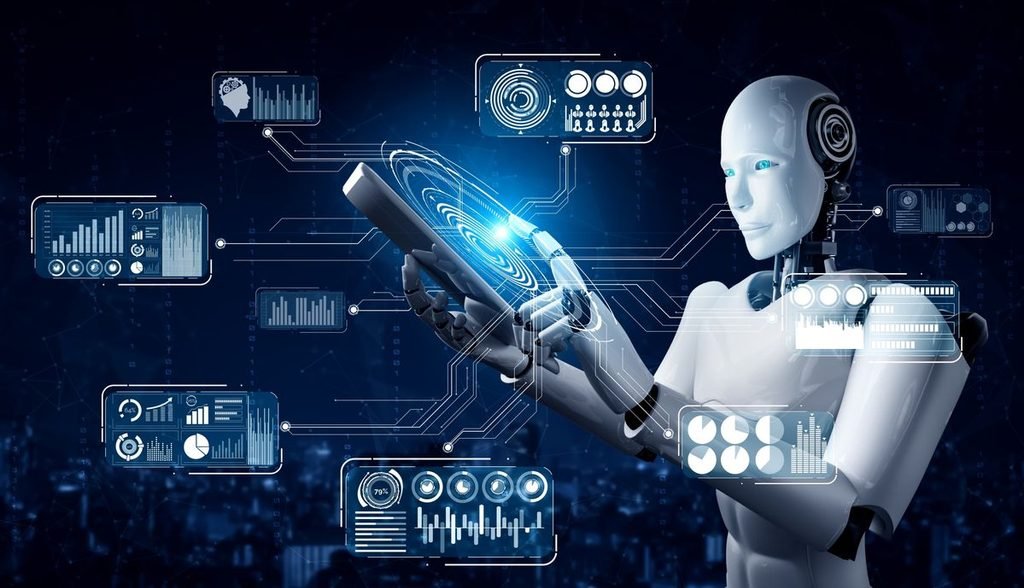
Instead of simply following a fixed sequence of instructions, newer robots can use cameras and sensors to analyze their surroundings. AI models can then help them identify objects, understand spatial relationships, predict movement, and determine what action should come next.
This shift from programmed automation to adaptive intelligence could become one of the most important developments in robotics.
AI Is Giving Robots a New Level of Awareness
One of the biggest breakthroughs in modern robotics is the integration of artificial intelligence.
AI allows robots to process enormous amounts of information and make decisions based on what they observe. Computer vision systems can help machines recognize objects, people, obstacles, and changes in their surroundings.
For example, a warehouse robot may encounter an unexpected box blocking its normal route. A traditional machine might stop because its programmed path is no longer possible. An AI-powered robot, however, could recognize the obstacle, calculate an alternative route, and continue working.
This ability to respond to changing circumstances is what makes modern robots fundamentally different from many earlier machines.
Robots Are Learning Through Experience
Machine learning is another major technology behind this transformation.
Rather than manually programming every possible situation, developers can train robotic systems using large amounts of data. Through repeated training and simulation, robots can improve their ability to perform complex tasks.
Some modern systems can learn how objects behave when pushed, lifted, moved, or manipulated. Others can improve their movements through trial and error in virtual environments before applying what they have learned to physical machines.
This approach is particularly important for tasks that are difficult to describe with simple instructions.
Human beings naturally adapt to unfamiliar situations. If we pick up an object we have never seen before, we can estimate its weight, shape, texture, and balance almost instantly. Researchers are working toward giving robots similar capabilities.
Humanoid Robots Are Attracting Global Attention
Humanoid robots are one of the most visible areas of this technological revolution.
Their human-like shape is not simply designed to make them look familiar. A human-shaped robot can potentially operate in environments already designed for people, including homes, factories, warehouses, offices, and public facilities.
Stairs, doors, shelves, tools, workstations, and vehicles are generally designed around the human body. A robot with two arms, two legs, cameras, and flexible movement could therefore perform tasks without requiring an entirely new environment.
Companies and research organizations are developing humanoid robots capable of walking, carrying objects, manipulating tools, and performing industrial tasks.
Although these machines are still developing, their progress suggests that robots may eventually become more versatile than the highly specialized machines used in traditional automation.
Robots and the Future of Work
The growing capabilities of robots naturally raise an important question: what will happen to human jobs?
The answer is unlikely to be simple.
Robots are particularly well suited to repetitive, physically demanding, dangerous, or highly precise tasks. In factories and warehouses, they can work for long periods without fatigue and can operate in environments that may be uncomfortable or hazardous for humans.
However, many jobs require communication, creativity, emotional intelligence, judgment, leadership, and complex problem-solving. These abilities remain difficult to reproduce reliably in machines.
Rather than completely replacing humans, robotics may initially transform how people work.
A factory worker, for example, could supervise several intelligent robots instead of performing every physical task personally. A technician might use robots to inspect dangerous equipment while focusing on analysis and repairs. In healthcare, robotic systems could assist professionals with transportation, monitoring, and repetitive procedures.
The workplace of the future may therefore involve humans and machines working together rather than operating separately.
Robots Could Transform Healthcare
Healthcare is another area where intelligent robotics could have a major impact.
Robotic systems are already used for certain surgical procedures, rehabilitation, laboratory automation, and patient assistance. As AI becomes more capable, robots may take on additional responsibilities.
Future systems could potentially help elderly people with everyday activities, deliver supplies inside hospitals, monitor environments, or assist patients with limited mobility.
The greatest challenge will be reliability. In healthcare, a small mistake can have serious consequences. Robots will therefore need extremely strong safety systems, accurate sensors, and carefully controlled decision-making processes.
The Rise of Human-Robot Collaboration
One of the most promising concepts in robotics is collaboration.
Instead of building robots that operate completely independently, engineers are increasingly developing systems that can understand and respond to human actions.
Imagine a worker assembling a product while a robot automatically provides the correct tools. Or imagine a robot carrying a heavy object while a human guides its movement. Such cooperation could combine human judgment with robotic strength and precision.
This approach could make automation more flexible and practical across many industries.
Challenges Still Remain
Despite rapid progress, intelligent robots are far from perfect.
Physical movement remains difficult. Walking across uneven surfaces, manipulating fragile objects, understanding ambiguous instructions, and operating safely around people require sophisticated technology.
Robots also need powerful computing systems, advanced sensors, reliable software, and large amounts of training data.
Cost is another major challenge. Building and maintaining advanced robots can be expensive, especially when compared with simpler automated machines.
There are also important questions surrounding safety, privacy, cybersecurity, employment, and regulation. As robots become more connected to networks and AI systems, protecting them from malfunction and cyberattack will become increasingly important.
What Comes Next?
The next stage of robotics will likely focus on making machines more capable, flexible, and useful outside controlled environments.
Future robots may be able to understand natural language more effectively, learn new tasks faster, and transfer knowledge from one environment to another.
AI could also allow robots to combine multiple abilities at once. Instead of having separate systems for navigation, object recognition, planning, and communication, future robots may use unified AI models capable of coordinating these functions.
If these technologies continue to improve, robots could move beyond factories and warehouses into homes, hospitals, construction sites, farms, offices, and other everyday environments.
A New Era of Intelligent Machines
The evolution of robotics is no longer simply about building machines that can move. It is increasingly about creating machines that can understand, learn, adapt, and cooperate.
Robots will not become human overnight, and significant technical challenges remain. However, the combination of artificial intelligence, advanced sensors, machine learning, and improved hardware is pushing robotics toward a more intelligent future.
The most important change may not be that robots are becoming more human. It may be that machines are becoming capable of operating in the complex environments humans have always worked in.
As this technology matures, the relationship between people and machines could change dramatically. Robots may become less like tools that simply follow instructions and more like intelligent systems that assist humans in solving real-world problems.
The robotics revolution is still developing, but one thing is becoming increasingly clear: the future of robots will be defined not only by what they can do, but by how intelligently they can adapt to the world around them.