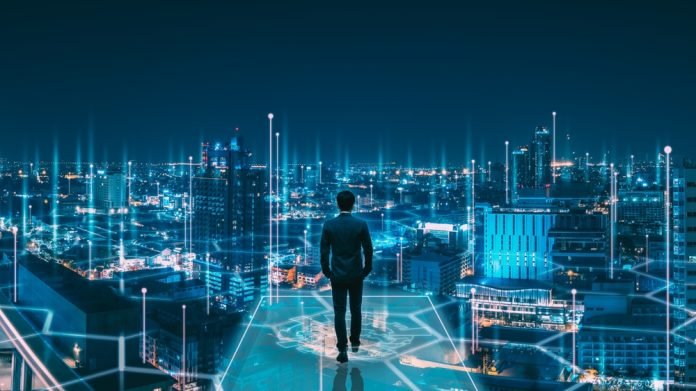
Imagine waking up in a world where your home understands your needs, cars drive themselves, artificial intelligence works alongside you, and doctors can detect diseases before symptoms even appear. This may sound like science fiction, but many of these technologies are already becoming a reality. Technology is no longer simply a tool we use—it is becoming a powerful force that is reshaping how we live, work, learn, communicate, and solve problems. As innovation continues at an unprecedented pace, the future of technology promises changes that could redefine almost every aspect of human life.
From the invention of the wheel to the development of computers, smartphones, and the internet, every major technological advancement has changed the course of human civilization. Today, artificial intelligence, robotics, biotechnology, virtual reality, cloud computing, and smart devices are developing rapidly. As we look toward the future, these technologies are expected to bring even greater changes to society, business, education, healthcare, transportation, and communication.
One of the most important technologies shaping the future is Artificial Intelligence (AI). AI enables computers and machines to perform tasks that normally require human intelligence, such as understanding language, recognizing patterns, solving problems, and making predictions. AI is already being used in customer service, education, healthcare, finance, entertainment, and many other industries. In the future, AI systems may become even more capable of assisting people with complicated tasks and making everyday activities faster and more efficient. However, the responsible development and use of AI will be essential to protect privacy, security, and human decision-making.
Robotics is another field that is likely to grow rapidly. Robots are already used in factories to perform precise and repetitive tasks. Future robots may become more flexible and intelligent, allowing them to work alongside humans in hospitals, warehouses, homes, farms, and offices. In healthcare, robots could assist surgeons or help patients with certain daily activities. In dangerous environments, robots could perform tasks that may put human lives at risk, such as working in disaster areas, deep underwater locations, or hazardous industrial facilities.
The future of healthcare technology is particularly promising. Medical technology is developing rapidly, and new tools are helping doctors diagnose and treat diseases more effectively. Wearable devices can monitor information such as heart rate, physical activity, and sleep patterns. In the future, these technologies may become even more sophisticated and help individuals understand their health more easily. Artificial intelligence could assist medical professionals by analyzing large amounts of medical information and identifying patterns that might otherwise be difficult to detect. Biotechnology may also contribute to personalized treatments designed according to an individual’s specific needs.
Education is another area that will be transformed by technology. Traditional classrooms are increasingly being supported by online learning platforms, digital textbooks, educational applications, and interactive tools. In the future, students may have access to personalized learning systems that adapt lessons according to their abilities, interests, and learning speed. Virtual and augmented reality could also make education more interactive. For example, students might explore historical places, conduct virtual science experiments, or study the human body through immersive digital experiences without leaving their classrooms.
The future of transportation is also expected to be very different from today. Electric vehicles are becoming increasingly popular as societies look for cleaner alternatives to traditional fuel-powered transportation. Autonomous driving technology may eventually allow vehicles to perform many driving tasks with limited human intervention. Smart transportation systems could improve traffic management and reduce accidents and travel times. In cities, advanced public transportation networks may become more connected and efficient, helping people move around while reducing pollution and congestion.
Another major development will be the growth of smart homes and smart cities. Smart homes can connect household devices through the internet, allowing people to control lighting, temperature, security systems, appliances, and other equipment. In the future, these systems may become more intelligent and automatically respond to people’s habits and needs. At a larger scale, smart cities could use technology to manage electricity, water, traffic, waste, and public services more efficiently. Sensors and connected systems could help cities respond quickly to problems and use resources more responsibly.
The Internet of Things (IoT) will play an important role in creating this connected future. IoT refers to physical devices that can connect to the internet and exchange information. These devices include smart watches, home appliances, industrial machines, vehicles, and environmental sensors. As more devices become connected, people and organizations will have access to larger amounts of real-time information. This could improve productivity, convenience, and decision-making across many industries.
Virtual Reality (VAR) and Augmented Reality (AR) may also change the way people interact with digital information. VAR can create immersive digital environments, while AR can place digital information over the real world. These technologies have already found applications in gaming and entertainment, but their future uses could be much broader. Businesses may use VAR for employee training, architects may use it to explore building designs, and doctors may use advanced simulations for medical education. AR could provide workers and consumers with useful information directly in their surroundings.
Technology will also have a major influence on the future of work. Automation and AI may take over some repetitive tasks, but they are also likely to create new careers and industries. Jobs involving software development, cybersecurity, data analysis, AI, robotics, renewable energy, and digital content may continue to grow. At the same time, workers may need to develop new skills and continue learning throughout their careers. Education and professional training will therefore become increasingly important in helping people adapt to technological change.
Despite its many benefits, the future of technology also presents serious challenges. Privacy is one of the biggest concerns because connected devices and online services can collect large amounts of personal information. Cybersecurity will become increasingly important as more essential systems become connected to the internet. There are also concerns about misinformation, digital addiction, unemployment caused by automation, and the misuse of artificial intelligence. Society will need strong laws, ethical standards, cybersecurity practices, and responsible technology development to address these challenges.
Another important issue is digital inequality. Not everyone has equal access to modern technology, high-speed internet, digital education, or advanced devices. If technological progress benefits only certain groups or countries, existing social and economic inequalities could become larger. Governments, educational institutions, and technology companies should work toward making digital tools more affordable and accessible so that more people can benefit from technological progress.
Environmental sustainability will also be an important part of the technological future. Technology can help reduce pollution through renewable energy, electric transportation, smart energy systems, and more efficient industrial processes. At the same time, electronic waste and the energy consumption of large digital systems can create environmental challenges. Future innovations will need to focus not only on performance and convenience but also on sustainability and responsible use of natural resources.
In conclusion, the future of technology is not a distant dream—it is already beginning to take shape around us. Artificial intelligence, robotics, healthcare innovation, smart cities, autonomous transportation, virtual reality, and connected devices could transform almost every part of human life. Technology has the potential to make society more efficient, connected, and innovative, but its development must be guided by responsibility and ethical considerations. The goal should not simply be to create more advanced machines, but to use technology to improve people’s lives and solve meaningful problems.
The future will ultimately depend on how humans choose to use the technologies they create. If innovation is combined with education, responsible decision-making, strong security, and concern for the environment, technology can become a powerful tool for building a better world. The future is coming faster than we think—and the choices we make today will determine what that future looks like.