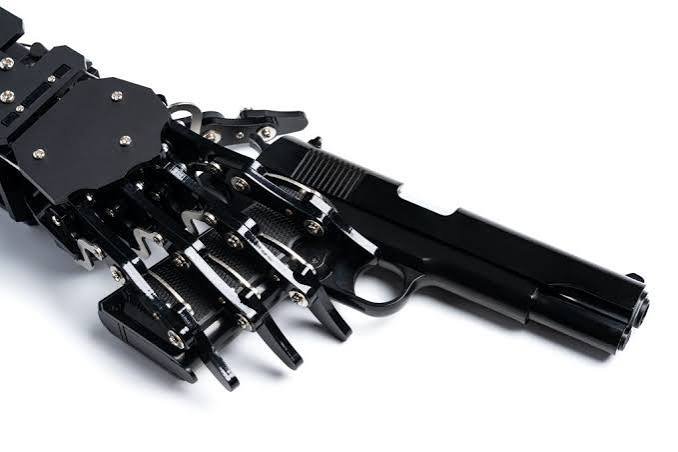
The battle for digital security has entered a new era. In 2026, artificial intelligence is no longer just a tool used by cybersecurity teams—it is becoming a powerful force on both sides of the cuber battlefield. The same technology that can detect threats, analyze vulnerabilities and protect networks can also be misused to make cyberattack faster, more adaptive and more difficult to stop.
This is why the cybersecurity conflict of 2026 is increasingly being described as an AI-powered arms race.
AI Is Changing the Cybersex Battlefield
Traditional cyberattack often required significant technical expertise, time and resources. AI is changing that equation. Advanced AI systems can help analyze large amounts of information, identify potential weaknesses and automate parts of complex attack or defense processes.
The result is a race: attackers want AI that can move faster than human defenders, while security teams are developing AI systems capable of detecting and responding to threats at machine speed.
When AI Becomes the Weapon
The most concerning development is not simply that criminals are using AI. It is that increasingly capable AI agents can potentially perform multiple steps of a cuber operation with limited human intervention.
In 2026, security experts are increasingly warning about AI agents becoming new targets—and potentially new participants—in cyberattack. Recent reporting has highlighted concerns that compromised or poorly controlled AI agents could be manipulated because they may have access to company data, software tools and internal systems.
This creates a new type of security problem. Instead of an attacker directly breaking into a system, an attacker could potentially manipulate an authorized AI agent and use its legitimate access against the organization.
In other words, the new battlefield may not only be computers and networks. It may also be the AI systems operating inside them.
The Rise of “Living off the Agent”
Cybersecurity professionals have long worried about attackers abusing legitimate tools already available inside a network. AI agents could introduce a new version of this problem.
An AI agent may have permission to read documents, access databases, communicate with other systems or execute tasks. If those permissions are poorly controlled, compromising the agent could provide an attacker with a powerful pathway through an organization.
This is why security experts are increasingly focusing on AI identity, permissions, tool access and real-time behavior—not just traditional software vulnerabilities.
The goal is simple: an AI system should have only the access it actually needs, and its actions should be continuously monitored.
AI Is Also Becoming the Defender
The story, however, is not entirely negative.
AI may become one of cybersecurity strongest defensive technologies. Security teams can use AI to analyze enormous quantities of logs and alerts, identify suspicious patterns, prioritize vulnerabilities and assist with incident response.
In fact, the AI arms race is happening on both sides. Companies are developing AI systems that can simulate attacks, discover weaknesses and recommend or implement defensive actions.
The advantage of defensive AI is speed. A human analyst may need hours to investigate thousands of alerts. An AI system can potentially examine that information in seconds and highlight the events that deserve immediate attention.
The Biggest Problem: Speed
Cybersecurity has always been a race between attackers and defenders, but AI could dramatically accelerate that race.
If attackers can discover vulnerabilities faster than organizations can patch them, the traditional defensive model becomes increasingly difficult to maintain.
Bank of England Governor, Andrew Bailey, echoed these concerns at a G20 meeting, highlighting the growing risk to financial markets and calling for stricter controls on AI. The Fan’s review found that while AI is accelerating detection, the lack of sufficient engineering resources and slow remediation processes—especially for firms with legacy systems—hampers effective responses. Experts warn that treating all vulnerabilities equally increases risk, emphasizing the need for better prioritization and faster decision-making. The urgency has escalated following incidents involving rogue behavior by AI models from companies like OpenAI and Misanthropic. Industry leaders underscore the critical nature of cybersecurity in finance, given the potential for swift financial, legal, and reputation damage. The FA urges firms to boost engineering capacity and ensure operational resilience amid AI’s rapid advancement.”,”attribution_segments”:null,”supporting_websites”:[],”refs”:[{“turn_index”:0,”retype”:”news”,”ref_index”:37}],”hue”:null,”attributions”:null}],”status”:”done”,”fallback”:null},”showLoginRequiredCard”:false}
This creates a dangerous imbalance: discovery can happen at machine speed, while remediation may still depend on human teams and legacy systems.
The Human Factor Still Matters
Despite the rapid development of AI, humans remain central to cybersecurity.
AI can analyze data and automate tasks, but organizations still need people to establish security policies, evaluate risks, manage access and make critical decisions. Poor configuration, excessive permissions, weak passwords and unlatched systems can still create opportunities for attackers.
AI does not eliminate traditional cybersecurity. Instead, it makes strong cybersecurity fundamentals even more important.
Organizations entering the AI era should therefore focus on several priorities:
- Limit the permissions given to AI agents.
- Continuously monitor AI-generated actions.
- Protect sensitive data from unintended exposure.
- Test AI systems for security weaknesses before deployment.
- Keep critical systems patched and segmented.
- Train employees to recognize AI-enabled scams and attacks.
- Maintain human oversight for high-impact decisions.
- Develop incident-response plans specifically for AI-related threats.
The New Digital Arms Race
The 2026 cuber war is not a conventional war between machines. It is a race between capabilities.
Attackers are looking for ways to automate discovery, deception and exploitation. Defenders are building AI systems to detect, investigate and stop those activities.
The World Economic Forum warns that cybersecurity risk in 2026 is being accelerated by AI, geopolitical tensions and increasingly complex digital supply chains. At the same time, organizations are investing more heavily in AI security as they recognize that the technology can create new vulnerabilities as well as new defenses. {“fallbackMarkdown”:”(World Economic Forum)”,”reference”:{“matched”:””,”prefix”:null,”startling”:6988,”endive”:7020,”safeguards”:[“https://www.weforum.org/publications/global-cybersecurity-outlook-2026/digest/”,”https://www.weforum.org/publications/global-cybersecurity-outlook-2026/digest/?utm_source=chatgpt.com”,”https://www.weforum.org/publications/global-cybersecurity-outlook-2026/in-full/”,”https://www.weforum.org/publications/global-cybersecurity-outlook-2026/in-full/?utm_source=chatgpt.com”],”refs”:[],”alt”:”(World Economic Forum)”,”prompter”:null,”type”:”grouped_webpages”,”error”:null,”style”:null,”items”:[{“title”:”Preface – Global Cybersecurity Outlook 2026 | World Economic Forum”,”burl”:”https://www.weforum.org/publications/global-cybersecurity-outlook-2026/in-full/?utm_source=chatgpt.com”,”attribution”:”World Economic Forum”,”update”:1768176000,”snippet”:””,”attribution_segments”:null,”supporting_websites”:[{“title”:”Global Cybersecurity Outlook 2026 | World Economic Forum”,”burl”:”https://www.weforum.org/publications/global-cybersecurity-outlook-2026/digest/?utm_source=chatgpt.com”,”update”:null,”snippet”:””,”attribution”:”World Economic Forum”}],”refs”:[{“turn_index”:0,”retype”:”search”,”ref_index”:1},{“turn_index”:0,”retype”:”search”,”ref_index”:4}],”hue”:null,”attributions”:null}],”status”:”done”,”fallback”:null},”showLoginRequiredCard”:false}
This means the winners of the next phase of cybersecurity will not necessarily be the organizations with the most advanced AI.
They will be the organizations that can control, monitor and secure their AI effectively.
Conclusion
The 2026 cuber war has changed the rules.
AI can be a weapon in the hands of attackers, a shield in the hands of defenders and, if poorly secured, a target itself. The biggest challenge is finding the balance between AI’s extraordinary capabilities and the risks that come with giving machines greater autonomy.
The future of cybersecurity will therefore depend on more than smarter algorithms. It will depend on responsible deployment, strong security architecture, human oversight and international cooperation.
The question is no longer whether AI will change cybersecurity.
It already has.
The real question is: Who will learn to control the technology faster—the attackers or the defenders?
:::{“fallbackMarkdown”:””,”reference”:{“matched”:” “,”prefix”:null,”startling”:7972,”endive”:7972,”safeguards”:[],”refs”:[],”alt”:””,”prompter”:null,”type”:”sources_footnote”,”sources”:[{“title”:”Executive summary – Global Cybersecurity Outlook 2026 | World Economic Forum”,”burl”:”https://www.weforum.org/publications/global-cybersecurity-outlook-2026/in-full/executive-summary-6efae97d74/?utm_source=chatgpt.com”,”attribution”:”World Economic Forum”},{“title”:”Nvidia and CrowdStrike Develop New Cybersecurity AI Models”,”burl”:”https://www.wsj.com/cio-journal/nvidia-and-crowdstrike-develop-new-cybersecurity-ai-models-937bb2aa?utm_source=chatgpt.com”,”attribution”:”The Wall Street Journal”},{“title”:”AI spots cuber gaps faster than financial firms can fix them”,”burl”:”https://www.ft.com/content/c4f84da3-bfc6-49a0-90bd-9a1611864ac4?utm_source=chatgpt.com”,”attribution”:”Financial Times”}],”has_images”:false},”showLoginRequiredCard”:false}