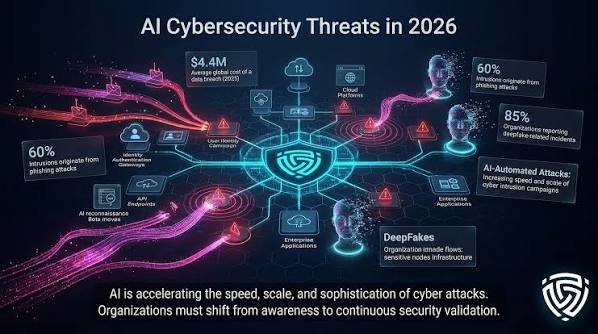
AI Cybersecurity in 2026 is becoming one of the most important challenges for businesses, governments, and everyday internet users. Artificial intelligence is helping security teams detect threats faster, analyze huge amounts of data, and respond to attacks more efficiently. However, the same technology is also giving noncriminals powerful new ways to attack systems, steal information, impersonate people, and automate scams.
As AI continues to evolve, traditional cybersecurity strategies are no longer enough on their own. Organizations need to understand how attackers are using AI and prepare for threats that can become faster, more convincing, and increasingly difficult to detect.
What Is AI Cybersecurity in 2026?
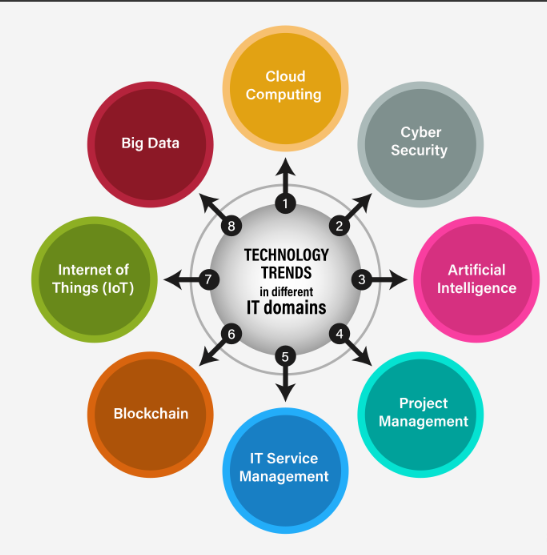
AI cybersecurity in 2026 refers to the use of artificial intelligence to protect digital systems while also addressing the new security threats created by AI itself. Security teams can use machine learning, automated detection, behavioral analysis, and AI-powered tools to identify suspicious activity.
At the same time, noncriminals can use generative AI, automated tools, and sophisticated social engineering techniques to improve their attacks. Therefore, cybersecurity has become an ongoing battle between defensive AI and offensive AI.
The Biggest AI Cybersecurity Threats in 2026
1. AI-Powered Phishing Attacks
Phishing remains one of the most common cybersecurity problems, but AI is making these attacks much more convincing.
In the past, phishing emails often contained obvious spelling mistakes or strange wording. Today, AI can generate professional-looking messages that imitate the writing style of a company, employee, or executive.
For example, an attacker could use publicly available information to create a highly personalized email that appears to come from a manager asking an employee to transfer money or share sensitive information.
Because these messages can be generated quickly and at scale, AI-powered phishing is expected to remain a major threat in 2026.
2. Deepfakes and AI Impersonation
Deepfake technology is another serious concern for AI Cybersecurity in 2026. Attackers can use AI to create convincing fake audio, images, and videos of real people.
For example, a criminal could imitate the voice of a company executive and ask an employee to approve an urgent payment. Similarly, fake video calls or manipulated recordings could be used to deceive employees, customers, or the public.
Consequently, organizations may need stronger identity verification methods rather than relying only on someone’s voice, video, or appearance.
3. Automated Counterattacks
AI can automate many parts of a cyberattack. Instead of manually searching for vulnerable systems, attackers can use automated technologies to analyze targets and identify potential weaknesses.
This makes attacks faster and potentially more salable. Moreover, automated systems can continuously adapt their behavior based on the responses they receive.
Security teams therefore need automated defenses that can detect suspicious activity and respond quickly before an attack spreads.
4. AI-Generated Malware
Another emerging concern is the use of AI to assist in developing malicious software.
AI can potentially help attackers write, modify, or troubleshoot malicious code. It can also assist with creating different variations of existing threats.
However, AI-generated malware does not necessarily mean completely autonomous counterattacks. Human attackers still play an important role in planning and directing many operations.
Nevertheless, the ability to automate parts of malware development could lower the barrier for less-skilled attackers.
5. AI-Powered Social Engineering
Social engineering attacks manipulate people rather than directly attacking technology. AI makes these attacks more effective because it can analyze information and create highly personalized communication.
Attackers may use information from social media, company websites, leaked databases, or other public sources to construct believable messages.
For example, an attacker could create a message referencing a person’s job, recent project, or colleagues. Because the message appears relevant, the victim may be more likely to trust it.
6. Attacks Against AI Systems
AI itself is also becoming a target.
Organizations are increasingly using AI models and Apps for customer service, software development, data analysis, and business operations. If these systems are poorly secured, attackers may attempt to manipulate them or gain access to sensitive information.
Prompt injection, data poisoning, model manipulation, and unauthorized access are examples of risks organizations need to consider.
Therefore, protecting AI systems must become an important part of modern cybersecurity strategies.
7. Data Poisoning
AI systems depend heavily on data. If attackers can manipulate the data used to train or operate an AI model, they may influence the system’s behavior.
This is known as data poisoning.
For organizations that depend on AI for fraud detection, threat detection, financial decisions, or other sensitive operations, manipulated data could create serious problems.
Consequently, companies need strong data governance, validation, monitoring, and access controls.
How AI Is Changing Cybersecurity
The relationship between AI and cybersecurity is not entirely negative. In fact, AI can also become one of the strongest tools available to defenders.
Security teams can use AI to:
- Detect unusual network behavior
- Analyze security logs
- Identify suspicious transactions
- Prioritize security alerts
- Detect malware patterns
- Automate repetitive security tasks
- Support incident response
- Identify potential vulnerabilities
For example, an AI system can analyze thousands of security events much faster than a human analyst. As a result, security teams can focus more attention on serious threats instead of manually reviewing every alert.
AI Cybersecurity in 2026: Why Businesses Need to Adapt
Businesses cannot treat AI security as a future problem. AI is already being integrated into workplaces, software platforms, customer support systems, and business processes.
At the same time, employees are increasingly using AI tools to write emails, analyze information, generate code, and complete everyday tasks.
This creates new security questions:
- What information can employees share with AI tools?
- Who can access company AI systems?
- How should sensitive data be protected?
- How can organizations verify AI-generated content?
- What happens if an AI service is compromised?
Companies should create clear AI usage policies and regularly train employees about AI-related security risks.
How to Protect Against AI Cybersecurity Threats
Organizations can take several practical steps to reduce their exposure.
Strengthen Employee Awareness
Employees should be trained to recognize phishing, impersonation, suspicious links, and AI-generated scams. Security awareness training should also explain that realistic audio, video, and messages can be artificially generated.
Use Multi-Factor Authentication
Multi-factor authentication adds another layer of protection if a password is stolen.
For sensitive accounts, organizations should consider stronger authentication methods, such as phishing-resistant authentication.
Protect Sensitive Data
Companies should carefully control what information employees and applications can send to AI systems. Sensitive business information should not be exposed unnecessarily.
Monitor AI Systems
AI applications should be monitored for unusual activity, unauthorized access, and unexpected behavior. Logging and regular security testing can help organizations identify problems earlier.
Create an AI Security Policy
Organizations should establish clear rules covering approved AI tools, sensitive information, access permissions, data retention, and employee responsibilities.
Keep Security Systems Updated
Cybersecurity threats change quickly. Regular software updates, vulnerability management, backups, and security testing remain essential even when organizations use advanced AI defenses.
The Future of AI Cybersecurity
The future of cybersecurity will likely involve both humans and AI working together.
AI can process enormous amounts of information and identify patterns quickly. However, human experts are still needed to make strategic decisions, investigate complex incidents, understand business risks, and determine the appropriate response.
In addition, organizations will need to think about security throughout the entire AI life cycle—from collecting and storing data to developing, deploying, and monitoring AI systems.
The companies that combine AI capabilities with strong security practices will be better positioned to deal with the changing threat landscape.
Conclusion
AI Cybersecurity in 2026 is no longer simply about using artificial intelligence to detect hackers. It is about defending against a new generation of AI-assisted attacks while securely using AI across organizations.
AI-powered phishing, deepfakes, automated attacks, social engineering, AI-generated malware, and attacks against AI systems are among the biggest risks businesses should watch.
However, AI also provides powerful defensive capabilities. By combining employee awareness, strong authentication, data protection, continuous monitoring, and responsible AI policies, organizations can reduce their exposure to emerging threats.
The biggest lesson is simple: as AI becomes more powerful, cybersecurity must become smarter, faster, and more proactive.