Introduction
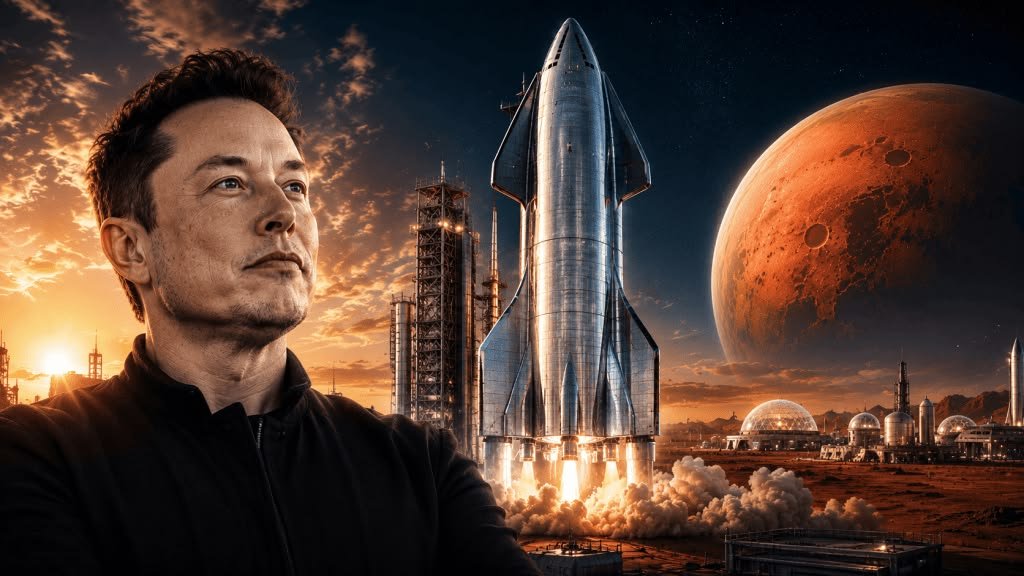
Humanity has always dreamed of exploring worlds beyond Earth. From the first Moon landing to modern space exploration missions, scientists have continued developing technologies that could help humans travel farther into space. One of the most ambitious projects in this field is Starship, the giant spacecraft system developed by SpaceX, the aerospace company Elon Musk founded.
Starship is designed to transport people and cargo beyond Earth, with Mars being one of its most important long-term destinations. Unlike traditional rockets that are largely discarded after launch, Starship is designed to be reusable, meaning its vehicles are intended to return and fly again. This approach could eventually reduce the cost of space transportation.
However, reaching Mars is extremely challenging. Starship must demonstrate reliable launches, safe landings, effective life-support systems, and the ability to operate in the harsh environment of space. Although the technology has significant potential, many engineering challenges remain before routine human missions to Mars become possible.
What Is SpaceX Starship?
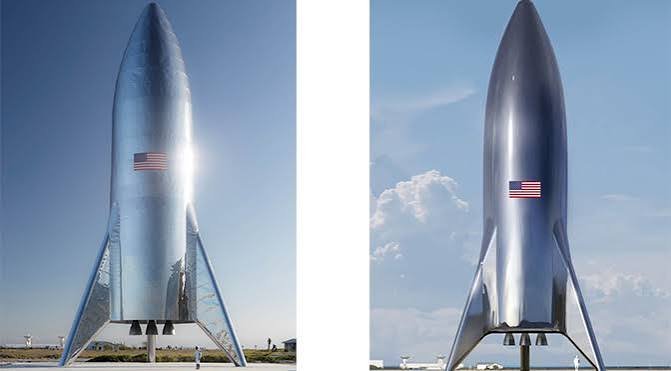
SpaceX Starship is a fully reusable transportation system designed for missions to Earth orbit, the Moon, Mars, and other destinations. The system consists of two main components: the Super Heavy booster and the Starship spacecraft.
The Super Heavy booster provides the powerful thrust needed to lift the spacecraft away from Earth. After separation, the booster is intended to return to Earth for recovery and reuse. The Starship vehicle continues its journey and is designed to carry cargo or, in future missions, astronauts.
Both components use Raptor engines developed by SpaceX. These engines use liquid methane and liquid oxygen as propellants. Methane is particularly interesting for Mars exploration because, in principle, it could be manufactured on Mars using local resources, provided suitable production equipment and energy are available.
The long-term goal is to create a transportation system capable of carrying substantial payloads into space while reducing the cost and complexity of repeated launches.
How Does Starship Technology Work?
Starship uses a two-stage launch system. First, the Super Heavy booster lifts the spacecraft through Earth’s atmosphere. Once the stages separate, the booster is intended to return for recovery, while Starship continues its flight.
For missions beyond Earth orbit, the spacecraft would need additional capabilities, including orbital refueling. This process involves transferring propellant between spacecraft in orbit. Refueling is especially important for Mars missions because a vehicle requires large amounts of fuel to travel long distances and complete its journey.
After reaching its destination, Starship would also need to perform a controlled landing. Returning to Earth involves atmospheric entry, during which the vehicle must withstand extreme heat and manage its speed before landing.
Each of these operations requires precise engineering, advanced software, reliable propulsion, and extensive testing. The system must demonstrate that these processes can work repeatedly and safely before it can support routine crewed missions.
Why Does SpaceX Want to Send Humans to Mars?
SpaceX’s broader ambition is to develop technology that could eventually support a human presence on Mars. A reusable transportation system could make it easier to send scientific instruments, construction equipment, habitats, and essential supplies to the planet.
A human mission would also allow astronauts to conduct geological research, collect samples, and operate equipment directly. Humans can adapt their activities as new discoveries are made, although sending people also introduces major risks and logistical demands.
Importantly, establishing a permanent settlement would require much more than a rocket. It would need reliable energy, radiation protection, food production, water supplies, medical support, and systems for maintaining breathable air.
The Importance of Reusable Rocket Technology
Traditional launch vehicles often discard major components after a flight. Replacing those components for every mission can make space transportation expensive.
Starship is designed to change this approach by recovering and reusing both its booster and spacecraft. If the system achieves frequent, reliable reuse with manageable refurbishment costs, it could significantly improve the economics of launching large payloads.
Reusability could benefit satellite deployment, scientific research, space stations, and future missions to the Moon and Mars. It could also make it possible to transport larger quantities of supplies than many existing launch systems can accommodate.
Nevertheless, reusability is not automatically inexpensive. Vehicles must be inspected, repaired, tested, and prepared for their next flight. The actual economic benefit will depend on operational reliability, turnaround time, and maintenance costs.
Major Challenges of Reaching Mars
1. Long-Distance Space Travel
A journey to Mars can take several months, depending on the positions of Earth and Mars and the chosen flight path. Astronauts would need protection from radiation, reliable communication systems, and sufficient supplies for the entire mission.
2. Human Health in Space
Long periods in microgravity can weaken muscles and bones. Space radiation may also increase health risks. Astronauts would need exercise equipment, medical monitoring, and effective shielding strategies.
3. Landing on Mars
Mars has an atmosphere, but it is much thinner than Earth’s. This makes slowing down a large, heavy spacecraft especially difficult. Starship must demonstrate that it can enter the Martian atmosphere, control its descent, and land safely.
4. Producing Fuel and Supplies
A sustainable Mars mission may require using local resources. Producing methane and oxygen on Mars could help support a return journey, but the necessary systems would need to be transported, installed, powered, and tested.
5. Reliable Life-Support Systems
Astronauts need clean water, oxygen, food, temperature control, and waste-management systems. These technologies must operate reliably in an isolated environment where emergency resupply from Earth is difficult.
How Starship Could Transform Space Exploration
If Starship achieves its intended capabilities, it could expand access to space by carrying larger payloads and supporting more frequent launches. Scientific missions could transport bigger instruments, while future lunar operations could use the system to deliver equipment and supplies.
For Mars exploration, the ability to transport substantial cargo would be particularly valuable. Robotic missions could potentially deliver habitats, power systems, scientific instruments, and other equipment before astronauts arrive.
Starship could also encourage innovation across the aerospace industry. Lower launch costs, if achieved, could make new scientific and commercial projects more practical. However, these benefits depend on successful development, regulatory approval, safe operations, and demonstrated performance.
Detailed Columns: Starship Technology at a Glance
SpaceX Starship combines several technologies that work together to support ambitious space missions. Its Super Heavy booster is designed to provide the initial launch power, while the Starship spacecraft is intended to carry cargo and eventually people. Raptor engines use liquid methane and liquid oxygen, and the stainless-steel vehicle structure is designed to withstand demanding flight conditions. Reusable components could reduce the need to manufacture a new rocket for every mission, while orbital refueling could help enable longer journeys. Advanced flight-control systems, heat protection, and landing technology are equally important to the vehicle’s performance. For Mars missions, these capabilities would need to work alongside radiation protection, reliable life support, surface habitats, and systems for producing essential resources. Together, these technologies represent a major engineering effort, but their full potential depends on successful testing and repeated operational demonstrations.
The Future of SpaceX Starship
The future of Starship will depend on how successfully SpaceX solves the technical challenges involved in reusable spaceflight. Continued flight testing can provide important information about propulsion, vehicle control, heat protection, recovery, and refueling.
Before astronauts can rely on Starship for a Mars journey, the system must demonstrate a high level of safety and reliability. Space agencies and commercial partners will also need to address mission planning, emergency procedures, communication delays, and the challenges of living on another planet.
Mars exploration is therefore a long-term effort rather than a single rocket launch. Starship could become an important part of that effort, but no spacecraft alone can guarantee a successful human settlement.
Conclusion
SpaceX Starship represents an ambitious attempt to make space transportation more reusable and capable of carrying large payloads. Its combination of powerful engines, reusable components, and planned orbital refueling could help support future missions to the Moon and Mars.
However, sending humans to Mars remains one of the greatest engineering challenges of our time. Radiation, human health, safe landings, fuel production, and life-support systems all require further development.
If these challenges can be addressed, Starship could contribute to a new era of space exploration. For now, its progress offers an important example of how engineering innovation is pushing the boundaries of what humanity may eventually achieve beyond Earth.
Frequently Asked Questions (FAQs)
1. What is SpaceX Starship?
SpaceX Starship is a reusable spacecraft system being developed to transport cargo and, eventually, people to destinations such as Earth orbit, the Moon, and Mars.
2. Who developed Starship?
Starship is being developed by SpaceX, the aerospace company founded by Elon Musk.
3. Can Starship take humans to Mars?
Starship is designed with Mars transportation as a long-term goal. However, routine human missions depend on further testing and solutions to major technical and safety challenges.
4. How long would a journey to Mars take?
A trip to Mars could take several months, depending on planetary positions, the spacecraft’s speed, and the selected trajectory.
5. What fuel does Starship use?
Starship’s Raptor engines use liquid methane and liquid oxygen. Future Mars missions may investigate producing these propellants using resources available on Mars.
6. Why is Starship designed to be reusable?
Reusability could reduce launch costs and allow components to fly multiple times instead of being discarded after every mission. The real savings will depend on maintenance and operational performance.
7. Has Starship already established a human settlement on Mars?
No. A human settlement on Mars has not been established by Starship. The project remains part of the ongoing development of future space transportation technology.
8. Why is reaching Mars so difficult?
Mars missions require reliable spacecraft, radiation protection, life-support systems, safe landing technology, and sufficient food, water, oxygen, and energy for a long journey and surface operations.
SpaceX Starship, Elon Musk SpaceX, Starship Mars mission, SpaceX Mars technology, reusable rocket technology, human mission to Mars, Raptor rocket engines, future space exploration, Mars colonization technology, next-generation spacecraft, orbital refueling, space technology innovation
#SpaceX #Starship #ElonMusk #MarsMission #SpaceExploration #SpaceTechnology #ReusableRockets #FutureTechnology #MarsExploration #Aerospace