
Technology has always been a powerful force behind human progress. From the invention of the internet and smartphones to cloud computing and artificial intelligence, technological breakthroughs have continuously transformed the way people live, work, communicate, and solve problems. Today, the pace of innovation is faster than ever. New technologies are emerging almost every day, while existing technologies are becoming more intelligent, connected, and accessible.
The question is no longer whether technology will change the future, but which technologies will have the greatest impact. The next major transformation is unlikely to come from a single invention. Instead, it will emerge from the convergence of artificial intelligence, robotics, advanced computing, wearable devices, clean energy, and other rapidly developing technologies.
Artificial Intelligence: The Core of the Next Technology Revolution
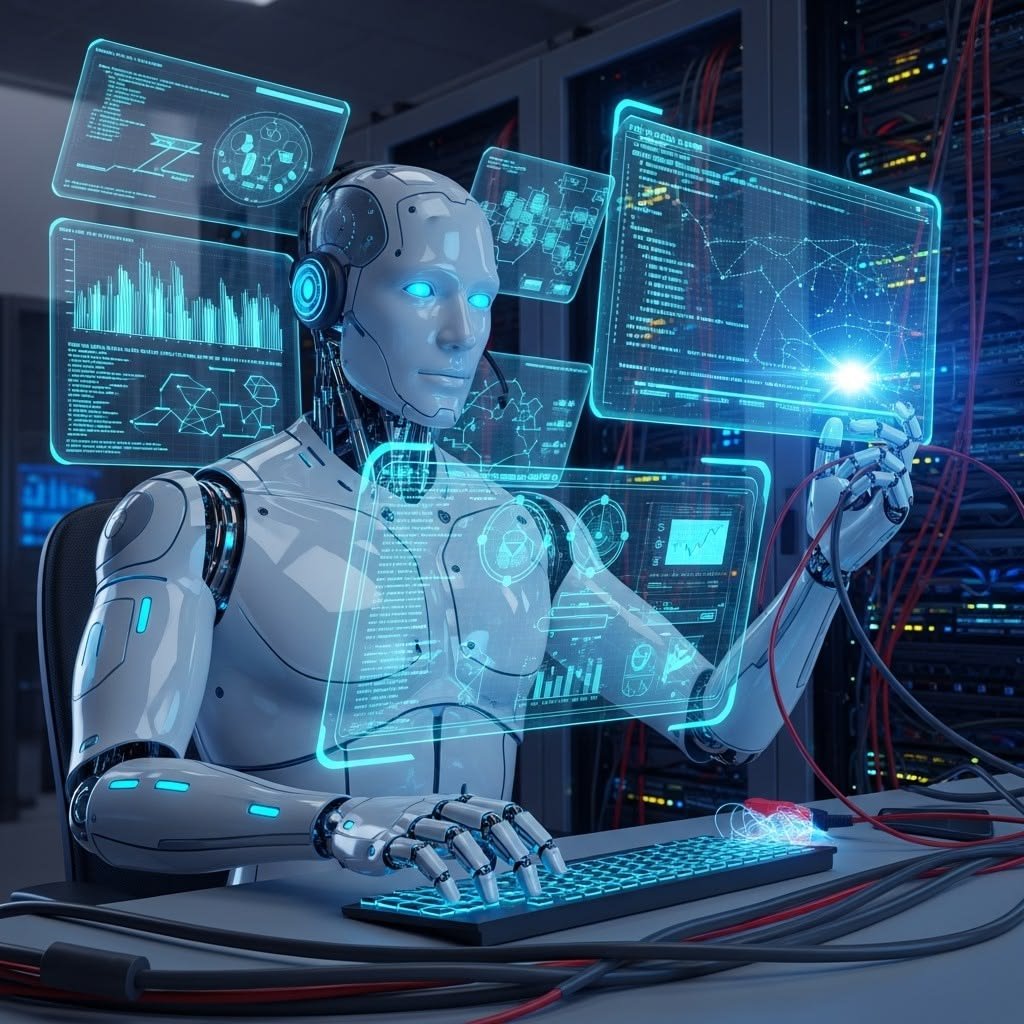
Artificial intelligence is already one of the most influential technologies in the world, and its development is expected to continue accelerating. AI systems can process enormous amounts of information, recognize patterns, generate content, assist with decision-making, and automate repetitive tasks.
Businesses are increasingly using AI to improve customer service, analyze data, detect fraud, optimize operations, and develop new products. In education, AI-powered systems can support personalized learning and help students access information more efficiently. In healthcare, AI can assist professionals with medical imaging, research, and the analysis of complex datasets.
However, the future of AI will also require responsible development. Issues such as privacy, misinformation, cybersecurity, employment, and algorithmic bias will become increasingly important. The success of AI will therefore depend not only on technological progress but also on responsible policies, human oversight, and ethical standards.
Robotics and Intelligent Machines
Another technology that could define the future is robotics. Robots have traditionally been associated with manufacturing and industrial environments, but advances in AI, sensors, computer vision, and machine learning are expanding their capabilities.
Future robots could perform a wider range of tasks in warehouses, hospitals, laboratories, agricultural environments, and homes. Autonomous machines may be able to navigate complex environments, understand instructions, and adapt to changing conditions.
The combination of robotics and AI is particularly significant. While robotics provides the physical ability to interact with the world, AI provides increasingly sophisticated capabilities for perception, planning, and decision-making. Together, these technologies could create machines that are more useful and adaptable than previous generations of robots.
The Rise of Wearable and Ambient Technology
Smartphones have become central to modern life, but the next generation of technology may move beyond traditional screens. Wearable devices such as smartwatches, smart glasses, health-monitoring devices, and other connected products are becoming increasingly sophisticated.
Future wearable technology could provide users with information in more natural and convenient ways. Instead of reaching for a smartphone, people may interact with digital services through voice, visual displays, gestures, or other interfaces.
At the same time, technology may become more “ambient,” meaning that digital systems operate quietly in the background. Smart homes, connected vehicles, and intelligent workplaces could automatically respond to user preferences and environmental conditions.
The challenge will be balancing convenience with privacy. As more devices collect information about their surroundings and users, strong security measures and transparent data practices will become increasingly important.
Clean Energy and the Technology of Sustainability
The future of technology is not only about digital innovation. Energy technology will also play a critical role in shaping the world.
Advances in battery technology, renewable energy, electric transportation, energy storage, and smart electrical grids could contribute to a more efficient energy system. Improvements in solar and wind technologies, combined with better energy-storage solutions, may make renewable energy increasingly practical in different environments.
Electric vehicles are another important example. As battery technology improves, electric transportation could become more accessible and efficient. Beyond personal vehicles, technological innovation is also taking place in public transportation, aviation, shipping, and industrial systems.
Sustainable technology is becoming increasingly important because economic growth and technological development require significant amounts of energy and resources. Future innovations will therefore need to consider not only performance and profitability but also environmental impact.
Quantum Computing: A New Era of Computing
Quantum computing represents another potentially transformation area of technology. Traditional computers process information using bits, while quantum computers use quantum systems that operate according to the principles of quantum mechanics.
Quantum computing is still an emerging field, and practical large-scale applications remain under development. However, researchers are exploring its potential for areas such as materials science, chemistry, optimization, and cryptography.
If sufficiently capable quantum computers become practical, they could solve certain types of problems that are extremely difficult for conventional computers. This does not mean quantum computers will replace everyday computers. Instead, they may become specialized tools for solving highly complex problems.
The Future of Connectivity
Connectivity is another important part of the next technology wave. Faster and more reliable networks can support increasingly connected devices, vehicles, machines, and services.
The development of advanced communication networks could enable applications that require low latency and high reliability. These capabilities may support smart factories, autonomous systems, immersive digital experiences, and large-scale Internet of Things applications.
As billions of devices become connected, however, cybersecurity will become even more important. Protecting personal information, business systems, critical infrastructure, and connected devices will require continuous innovation.
Technology and the Future of Work
Technological change will also have a significant impact on employment. Automation and AI are likely to change the nature of many jobs, particularly tasks that are repetitive, predictable, or highly data-driven.
At the same time, technology can create new professions and industries. Demand may increase for specialists in AI, cybersecurity, robotics, data science, renewable energy, software development, and other emerging fields.
The future of work will therefore require continuous learning. Education systems, businesses, and individuals may need to place greater emphasis on digital literacy, creativity, critical thinking, communication, and adaptability.
Rather than simply asking whether technology will replace human workers, it is more useful to consider how humans and technology can work together. Machines can handle certain repetitive or computational tasks, while people can contribute judgment, creativity, empathy, leadership, and social understanding.
What Will Be the Next Big Thing?
The next major breakthrough in technology may not be a single device or application. It could be the convergence of several technologies working together.
Imagine AI-powered software communicating with intelligent robots, wearable devices providing real-time information, connected infrastructure managing energy efficiently, and advanced computing systems solving highly complex problems. Each technology is powerful on its own, but their combination could produce entirely new possibilities.
This convergence is likely to be one of the defining characteristics of the next technological era. Companies and researchers are already exploring ways to combine AI with robotics, healthcare, transportation, energy, education, and communication.
Conclusion
The next big thing in tech is difficult to predict because innovation rarely follows a perfectly predictable path. A technology that appears experimental today could become mainstream tomorrow, while another promising invention may take decades to reach its full potential.
Artificial intelligence, robotics, wearable technology, clean energy, quantum computing, and advanced connectivity are among the fields that could significantly influence the future. Their impact will depend not only on technical capabilities but also on affordability, regulation, public acceptance, security, and responsible use.
Ultimately, the future of technology will be shaped by how humans choose to develop and apply these innovations. Technology is a tool, and its value depends on the problems it solves and the people it serves. The next technology revolution is already underway, and the most exciting developments may be those that bring several emerging technologies together to create solutions that are more intelligent, efficient, sustainable, and useful than ever before.