
Technology is evolving at an extraordinary pace, transforming the way people live, work, communicate, and solve complex problems. From artificial intelligence and robotics to quantum computing, blockchain, advanced connectivity, and immersive digital experiences, emerging technologies are creating new possibilities across almost every industry. As innovation continues to accelerate, understanding the future of emerging technologies has become increasingly important for businesses, professionals, and everyday users.
The next generation of technology will not simply introduce new gadgets or software. Instead, it will create interconnected digital ecosystems capable of analyzing information, automating processes, supporting human decisions, and delivering highly personalized experiences. These developments could reshape industries ranging from healthcare and education to finance, transportation, manufacturing, and entertainment.
Artificial Intelligence and Machine Learning
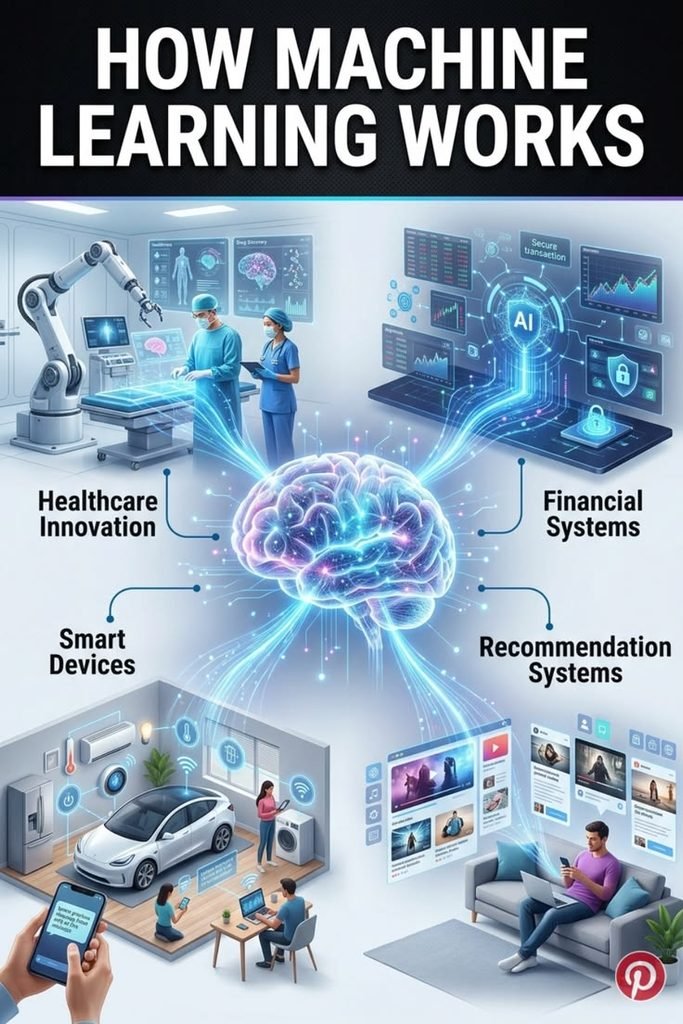
Artificial intelligence is expected to remain one of the most influential technologies of the coming years. Modern AI systems can analyze enormous amounts of information, recognize patterns, generate content, automate tasks, and assist people with complex decisions.
Machine learning, a major branch of artificial intelligence, allows computer systems to improve their performance by learning from data. As algorithms become more advanced and computing resources become more powerful, AI applications are likely to become increasingly capable.
Businesses are already using AI for customer service, fraud detection, marketing, cybersecurity, data analysis, and workflow automation. In the future, AI assistants could become more integrated into professional software, smartphones, vehicles, and smart-home systems.
However, responsible development will remain essential. Organizations will need to consider privacy, security, transparency, accuracy, and the potential impact of automation on workers. Human oversight will continue to play an important role in ensuring that AI is used responsibly.
Robotics and Intelligent Automation
Robotics is another major area shaping the future of technology. Traditional robots have mainly been used in controlled industrial environments, but advances in artificial intelligence, sensors, computer vision, and mobility are creating more flexible machines.
Future robots could assist in warehouses, hospitals, laboratories, agriculture, construction, and domestic environments. Autonomous machines may be able to navigate complex surroundings, identify objects, and perform tasks with limited human intervention.
Industrial automation could also improve productivity by allowing robots to perform repetitive or hazardous activities. Meanwhile, collaborative robots, often called cobots, can work alongside human employees and support them with physically demanding or highly repetitive tasks.
The combination of robotics and AI may ultimately create machines that can adapt to changing situations rather than simply follow fixed instructions.
Quantum Computing
Quantum computing represents a fundamentally different approach to processing information. Unlike conventional computers, quantum computers use quantum mechanical principles to process certain types of problems in ways that could provide significant advantages.
Although large-scale practical quantum computing is still developing, researchers and technology companies are exploring its potential applications. These include advanced scientific simulations, materials research, optimization, cryptography, and drug discovery.
The future of quantum computing may not replace conventional computers. Instead, quantum systems could work alongside traditional computing infrastructure to solve specialized problems that are extremely difficult for classical machines.
As this field develops, organizations will also need to prepare for the cybersecurity implications of powerful quantum systems. New forms of cryptography may become increasingly important for protecting sensitive digital information.
5G, 6G, and Advanced Connectivity
Connectivity is the foundation of many emerging technologies. The expansion of 5G networks has enabled faster communication, lower latency, and improved support for connected devices. Looking further ahead, researchers are already exploring the possibilities of 6G and other advanced communication technologies.
Future networks could support massive numbers of connected devices while enabling real-time applications. Autonomous transportation, smart cities, remote industrial operations, augmented reality, and connected healthcare could all benefit from improved connectivity.
Faster networks will also contribute to the growth of the Internet of Things. Sensors embedded in homes, factories, vehicles, buildings, and infrastructure can collect data and communicate with digital platforms.
As connected environments expand, cybersecurity and privacy will become increasingly important. A larger number of connected devices also means a larger potential attack surface, making strong security practices essential.
Internet of Things and Smart Environments
The Internet of Things, commonly known as IoT, connects physical objects to digital networks. Smart thermostats, wearable devices, connected appliances, industrial sensors, and intelligent vehicles are already examples of IoT technology.
In the future, IoT ecosystems could become much more sophisticated. Smart buildings may automatically adjust lighting, temperature, and energy consumption according to real-time conditions. Factories could monitor equipment continuously and identify potential failures before they cause expensive downtime.
Smart cities could use connected sensors to improve traffic management, public transportation, energy distribution, waste management, and environmental monitoring.
The combination of IoT, artificial intelligence, and advanced connectivity will make these systems increasingly responsive. Nevertheless, collecting large amounts of data will require strong privacy policies and effective cybersecurity measures.
Extended Reality and Immersive Experiences
Extended reality includes virtual reality, augmented reality, and mixed reality. These technologies are changing how digital information can be experienced.
Virtual reality can create immersive digital environments, while augmented reality places digital information over the physical world. Mixed-reality systems combine elements of both approaches.
Future applications could extend beyond gaming and entertainment. Businesses may use immersive technology for employee training, product demonstrations, engineering visualization, education, healthcare simulations, and remote collaboration.
For example, students could explore historical environments through virtual experiences, while engineers could visualize complex designs before construction begins. Similarly, medical professionals could use immersive simulations for training and planning.
As hardware becomes lighter, more comfortable, and more capable, immersive technologies may become a more natural part of everyday digital experiences.
Blockchain and the Future of Digital Trust
Blockchain technology introduced a decentralized approach to recording and verifying digital transactions. While cryptocurrencies remain one of its most visible applications, blockchain technology can also be used in areas such as supply-chain management, digital identity, record verification, and asset tracking.
Future blockchain applications could help organizations improve transparency and traceability. For example, supply-chain participants may use shared digital records to track products as they move through different stages.
Smart contracts may also automate certain agreements when predefined conditions are met. However, blockchain adoption will depend on practical factors such as scalability, energy efficiency, regulation, security, and ease of use.
Biotechnology and Technology-Driven Healthcare
Emerging technology is also transforming healthcare and biotechnology. Artificial intelligence can assist with medical research, image analysis, and data processing, while advanced sensors can monitor health-related information.
Wearable devices may become increasingly capable of collecting continuous data and providing personalized insights. At the same time, biotechnology and computational tools are helping researchers investigate new approaches to disease treatment and drug development.
The future could bring more personalized healthcare based on individual biological information, lifestyle factors, and medical history. However, sensitive health data must be handled with strict privacy and security protections.
Sustainable and Green Technologies
Technology will also play an important role in addressing environmental challenges. Renewable energy systems, energy-efficient computing, smart grids, electric transportation, and advanced battery technologies are areas receiving significant attention.
Artificial intelligence can help optimize energy consumption, while IoT sensors can monitor resource usage in buildings and industrial facilities. Advanced materials and manufacturing techniques may also help reduce waste.
Future innovations could make energy systems more efficient and resilient. However, technology itself has environmental costs, including energy consumption, electronic waste, and the resources required to manufacture devices. Sustainable design and responsible resource management will therefore remain important.
Cybersecurity in the Emerging Technology Era
As technology becomes more connected, cybersecurity will become even more critical. AI systems, cloud platforms, connected devices, autonomous machines, and digital infrastructure all require protection against cyber threats.
Future cybersecurity strategies are likely to combine artificial intelligence, automated monitoring, stronger authentication, encryption, and continuous threat detection. Organizations will need to treat security as an ongoing process rather than a one-time investment.
Individuals will also need stronger digital-security habits, including using unique passwords, enabling multi-factor authentication, keeping software updated, and being careful with suspicious links and messages.
The Human Role in the Future of Technology
Despite rapid technological progress, people will remain central to innovation. Technology can automate many tasks, but creativity, communication, critical thinking, leadership, ethical judgment, and human collaboration remain highly valuable.
The future workplace is therefore likely to emphasize cooperation between humans and intelligent technologies. Employees may increasingly use AI tools and automated systems to handle repetitive tasks while focusing more attention on strategic and creative responsibilities.
Education and continuous learning will become particularly important. As technologies evolve, workers will need opportunities to develop new technical and digital skills.
Conclusion
The future of emerging technologies promises significant changes across society and industry. Artificial intelligence, robotics, quantum computing, advanced connectivity, IoT, extended reality, blockchain, biotechnology, and sustainable technologies are all contributing to a rapidly changing digital landscape.
The most important transformation may not come from any single invention. Instead, it could emerge from the combination of multiple technologies working together. AI can analyze IoT data, advanced networks can connect intelligent devices, robotics can act on digital instructions, and immersive platforms can provide new ways to interact with information.
At the same time, responsible innovation will be essential. Privacy, cybersecurity, sustainability, accessibility, ethical development, and human oversight must remain part of the conversation.
Ultimately, the future of emerging technologies will be shaped not only by what technology can do, but also by how people choose to develop and use it. Organizations and individuals that understand these changes, adapt their skills, and approach innovation responsibly will be better prepared for an increasingly connected and technology-driven world.