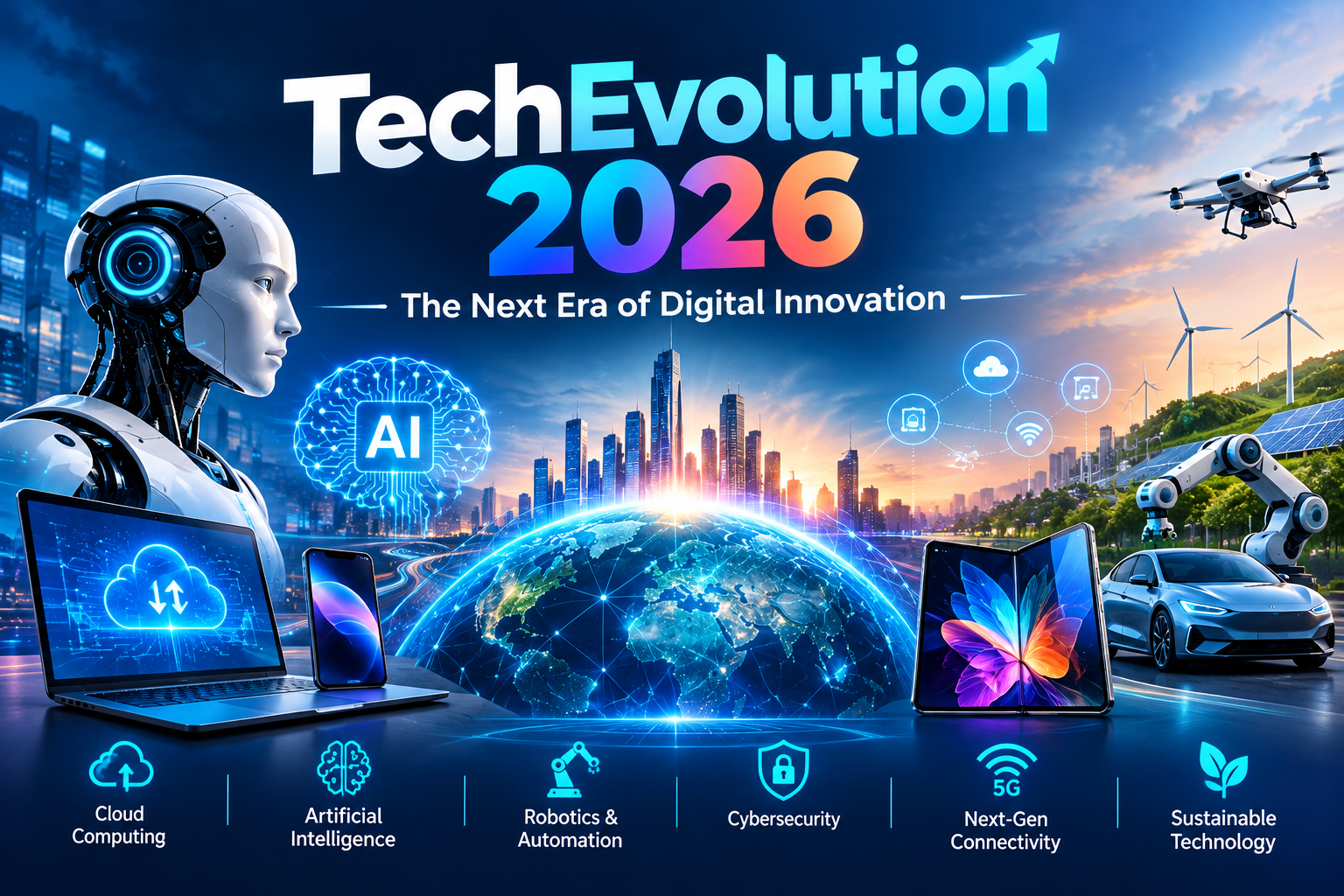
Technology continues to transform the way people live, work, communicate, and solve everyday problems. As we move through 2026, digital innovation is becoming more connected, intelligent, and accessible than ever before. From artificial intelligence and advanced robotics to cloud computing, cybersecurity, smart devices, and sustainable technology, new developments are creating opportunities across almost every industry.
TechEvolution 2026 – The Next Era of Digital Innovation represents a period where technology is moving beyond simple automation. Modern digital systems are increasingly capable of understanding information, supporting decision-making, connecting devices, and helping businesses deliver better services. As these technologies continue to mature, their influence is expected to become even more visible in everyday life.
Artificial Intelligence Is Driving Digital Innovation
Artificial intelligence remains one of the most important areas of technology. AI systems can analyze large amounts of information, identify patterns, generate content, automate repetitive tasks, and assist people with complex workflows.
In 2026, businesses are increasingly exploring AI for customer service, data analysis, software development, marketing, healthcare research, finance, education, and other applications. AI-powered assistants can help employees organize information and complete routine tasks, allowing people to focus more on creative and strategic work.
Machine learning is also becoming more useful because modern systems can learn from data and improve their performance over time. However, responsible development remains important. Organizations need to consider privacy, security, accuracy, transparency, and human oversight when implementing AI technologies.
The Rise of Intelligent Automation
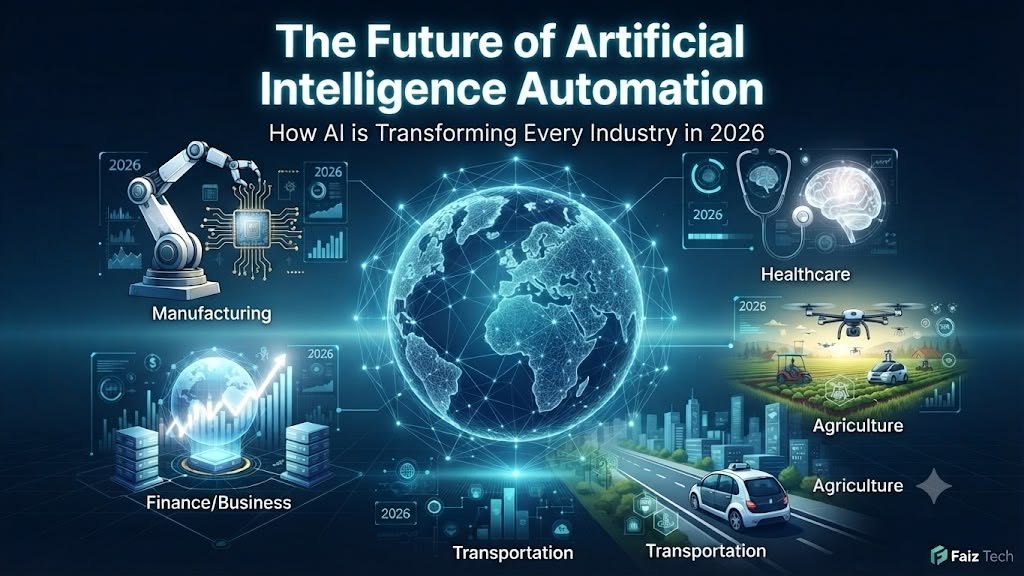
Automation is another major part of the technology landscape. Traditional automation focused primarily on repetitive processes, while intelligent automation combines software, artificial intelligence, machine learning, and data analysis.
For example, businesses can use automated systems to process documents, manage customer requests, monitor operations, and identify unusual activities. In manufacturing, intelligent machines can monitor production lines and help detect potential problems before they cause major disruptions.
The combination of AI and automation can improve efficiency while reducing the amount of time employees spend on repetitive activities. Nevertheless, successful automation depends on good planning and appropriate human supervision.
Cloud Computing Continues to Expand
Cloud computing has become an essential foundation for modern digital services. Instead of depending entirely on physical servers, organizations can use cloud platforms to store information, run applications, manage databases, and scale computing resources according to demand.
One important advantage of cloud technology is flexibility. Businesses can increase or decrease computing resources without necessarily investing in large amounts of physical infrastructure. Cloud services can also support remote collaboration by allowing authorized users to access applications and information from different locations.
As organizations adopt more AI and data-intensive applications, cloud infrastructure will continue to play an important role. At the same time, companies must pay close attention to cloud security, data protection, access controls, and compliance requirements.
Smartphones and Smart Devices Are Becoming More Capable
Smartphones remain one of the most important technologies in everyday life. Modern devices combine powerful processors, advanced cameras, artificial intelligence features, high-quality displays, fast connectivity, and a wide range of applications.
Beyond smartphones, connected devices are becoming increasingly common. Smart watches, home security systems, connected appliances, health-monitoring devices, and other Internet of Things products can communicate with networks and exchange information.
The growth of connected devices is creating a more integrated digital environment. However, greater connectivity also increases the importance of strong passwords, software updates, secure networks, and privacy protection.
Robotics and Intelligent Machines
Robotics is moving into new areas as machines become more capable of sensing their surroundings and responding to changing conditions. Robots are being developed for manufacturing, logistics, agriculture, research, healthcare support, and other specialized tasks.
Modern robots can combine cameras, sensors, machine learning, and software to perform increasingly complex operations. In warehouses, robotic systems can help move products and organize inventory. In manufacturing, robots can perform precise and repetitive operations.
The future of robotics will likely involve greater cooperation between humans and machines. Rather than replacing every human role, many robotic systems are designed to assist workers, improve safety, and handle tasks that are difficult or repetitive.
Cybersecurity Becomes More Important
As digital systems become more connected, cybersecurity becomes an essential part of technological development. Businesses, governments, and individuals face threats such as phishing, malware, ransomware, identity theft, and unauthorized access.
Artificial intelligence is now being used on both sides of the cybersecurity landscape. Security teams can use AI to analyze network activity, identify suspicious behavior, and prioritize potential threats. At the same time, attackers may attempt to use automated technologies to create more sophisticated attacks.
Therefore, cybersecurity strategies must continue to evolve. Regular software updates, multi-factor authentication, employee awareness, secure data management, and continuous monitoring are important elements of a strong security strategy.
The Growth of 5G and Next-Generation Connectivity
Fast and reliable connectivity is another important part of digital transformation. Advanced mobile networks can support faster communication, lower latency, and large numbers of connected devices.
Better connectivity can support applications such as smart cities, connected vehicles, remote collaboration, industrial automation, and Internet of Things systems. As network infrastructure develops, digital services can become more responsive and accessible.
Connectivity is not only about speed. Reliability, coverage, security, affordability, and access are also important factors in determining how effectively people and organizations can benefit from digital technologies.
Sustainable Technology and Green Innovation
Technology is also playing a role in addressing environmental challenges. Companies and researchers are developing more energy-efficient devices, renewable energy systems, smart power management solutions, and technologies designed to reduce waste.
Data centers, for example, require significant amounts of energy, which has increased interest in efficient hardware and renewable energy sources. Smart systems can also help organizations monitor energy consumption and identify areas where resources can be used more efficiently.
Sustainable technology demonstrates that digital innovation is not only about creating faster or more powerful products. It can also focus on improving resource efficiency and reducing environmental impact.
Digital Transformation in Business
Businesses across different industries are adopting digital technologies to improve operations and customer experiences. Online platforms, cloud applications, analytics tools, AI systems, and digital payment solutions are changing traditional business models.
Small businesses can also benefit from digital transformation. E-commerce platforms, social media marketing, online customer support, and cloud-based business tools can help smaller organizations reach customers and manage operations more efficiently.
However, digital transformation requires more than purchasing new software. Businesses need clear objectives, employee training, appropriate security measures, and a strategy for integrating technology into existing workflows.
The Future of Digital Innovation
The next era of technology will likely be defined by integration. Instead of individual technologies operating separately, AI, cloud computing, robotics, cybersecurity, connected devices, and advanced networks are increasingly working together.
This integration can create smarter digital environments where information moves efficiently between people, devices, and software systems. For example, an intelligent business platform could combine cloud computing, AI analytics, connected sensors, and automated workflows to provide real-time operational insights.
At the same time, technological progress brings important questions about privacy, employment, digital access, security, and responsible innovation. The future of technology will therefore depend not only on what can be built, but also on how responsibly those technologies are designed and used.
Conclusion
TechEvolution 2026 – The Next Era of Digital Innovation highlights a rapidly changing technology landscape. Artificial intelligence, intelligent automation, cloud computing, smart devices, robotics, cybersecurity, advanced connectivity, and sustainable technology are all contributing to a more connected digital world.
The most significant developments may not come from one technology alone. Instead, the combination of multiple technologies could create new possibilities for businesses, communities, and individuals.
As innovation continues, organizations and users will need to balance technological opportunities with security, privacy, sustainability, and responsible use. With thoughtful implementation and continuous learning, digital innovation can become an important tool for creating more efficient, connected, and adaptable experiences in the years ahead.