Introduction
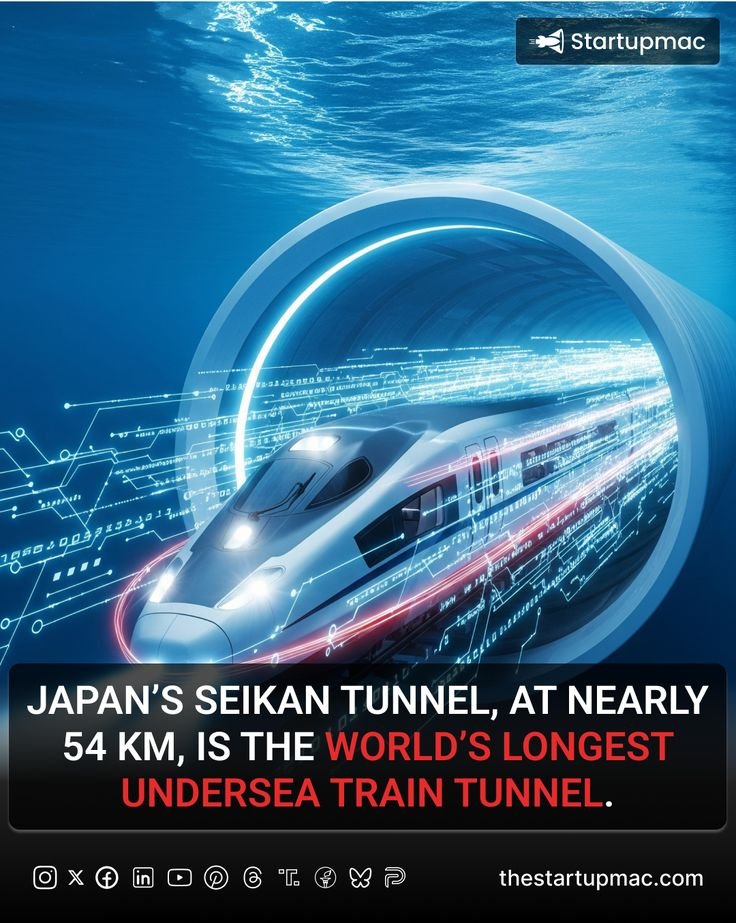
Japan has built a railway connection that allows trains to travel beneath the sea. It is not a futuristic experiment or a science-fiction concept. It is a real transportation system operating through the Seikan Tunnel, which connects Honshu and Hokkaido.
The tunnel runs beneath the Tsugaru Strait in northern Japan. It carries conventional railway services and Hokkaido Shinkansen bullet trains, providing a direct connection between the country’s two major islands.
What makes this project remarkable is the engineering required to build it. Workers had to excavate through difficult rock formations, control powerful underground water flows, and construct a railway system capable of operating in a challenging environment.
The Seikan Tunnel opened in 1988, but its importance has grown since Shinkansen services began using it in 2016. It remains one of the most interesting examples of large-scale railway engineering.
1. What Is Japan’s Underwater Train?
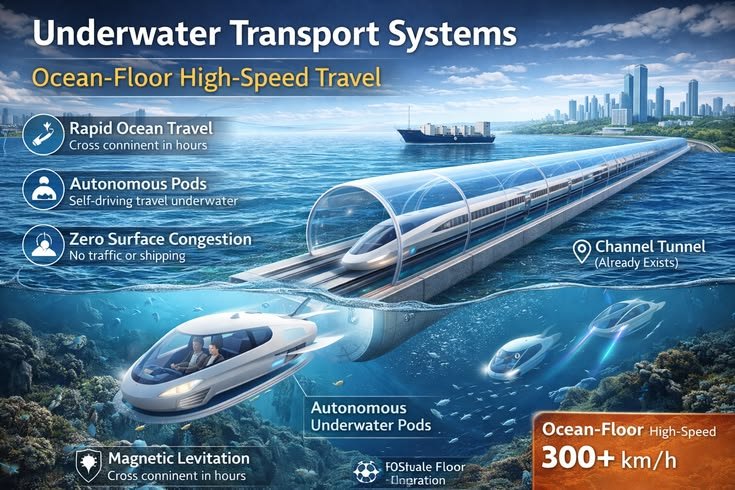
Japan’s underwater train is associated with the Seikan Tunnel, a railway passage beneath the Tsugaru Strait.
The tunnel connects Aomori Prefecture on Honshu with Hokkaido. Instead of travelling over the ocean, trains use railway tracks installed inside an underground tunnel beneath the seabed.
The distinction is important: trains do not move through water. They travel inside a protected structure surrounded by rock and underground geological formations.
Before the tunnel existed, ferries provided an important connection between the islands. However, sea conditions could interrupt transportation, making a permanent railway connection an attractive solution.
Today, the tunnel supports passenger transportation and freight services, making it an important part of Japan’s national railway network.
2. Seikan Tunnel: Important Facts and Dimensions
The Seikan Tunnel is an impressive example of how civil engineering can overcome geographical barriers.
Its main railway tunnel is approximately 53.85 kilometres long, including a 23.3-kilometre section beneath the seabed.
Here are its main specifications:
| Feature | Details |
|---|---|
| Tunnel name | Seikan Tunnel |
| Country | Japan |
| Opening date | March 1988 |
| Total length | 53.85 km |
| Undersea section | 23.3 km |
| Deepest point | 240 metres below sea level |
| Location | Tsugaru Strait |
| Connected islands | Honshu and Hokkaido |
| Main railway users | Shinkansen and freight trains |
The tunnel’s deepest section is approximately 100 metres below the seabed. This means the railway is protected by a substantial layer of geological material rather than being directly exposed to seawater.
Its dimensions and construction methods make it a significant achievement in modern tunnel engineering.
3. Why Did Japan Build a Tunnel Under the Sea?
The idea behind the Seikan Tunnel became particularly important after a devastating maritime disaster in 1954.
A permanent underground railway connection offered an alternative to ferry services.
Japan began studying the geological conditions of the strait and investigating whether a tunnel could be constructed beneath it.
The project was not simply about building a shorter travel route. It was about creating a more dependable transportation connection that could support passengers and freight in different weather conditions.
4. How Was the Seikan Tunnel Constructed?
Constructing the Seikan Tunnel was an enormous engineering challenge. Engineers had to deal with unstable geological formations, underground water, high pressure, and the difficulty of working beneath a major sea channel.
The project involved several stages.
Geological surveys
Investigations began decades before the tunnel opened. Engineers studied underground rock formations to determine where the tunnel could safely pass.
They also examined faults, fractured rock, and areas where groundwater could enter the construction site.
Pilot tunnel excavation
A small exploratory tunnel was constructed first. Its purpose was to help engineers understand the geological conditions before excavation of the larger railway tunnel.
This provided valuable information about rock strength, underground water, and possible construction difficulties.
Service tunnel construction
A separate service tunnel provided access for construction workers and supported excavation, maintenance, and other engineering activities.
Main railway tunnel
After sufficient geological information had been collected, workers excavated the main tunnel that would eventually carry trains.
Railway installation
The final stages involved installing railway tracks, electrical equipment, signalling systems, ventilation facilities, drainage infrastructure, and safety equipment.
Construction began in 1971 and the tunnel officially opened in March 1988.
5. The Three-Tunnel Engineering System
One of the most interesting features of the Seikan Tunnel is that it does not rely on a single underground passage.
Its underwater section uses three interconnected tunnel structures with different purposes.
Pilot tunnel: This smaller passage was primarily used to investigate geological conditions and identify potential construction problems.
Service tunnel: This passage supported construction activities and provides access for maintenance and other operational requirements.
Main tunnel: This is the railway passage where trains travel between Honshu and Hokkaido.
Connections between the tunnel sections allow engineers to manage maintenance and underground operations more effectively.
This design was especially important because working beneath the sea leaves little room for unexpected construction problems.
6. How Does the Tunnel Prevent Seawater From Entering?
Water infiltration was one of the biggest challenges during the construction of the Seikan Tunnel.
The surrounding rock contains underground water, and certain geological sections were particularly difficult to excavate.
Engineers developed several methods to control water before it could create serious problems.
Cement grouting
Grouting involves injecting a special material into cracks and openings in the surrounding rock.
The material fills spaces through which water could travel, helping strengthen the ground and reduce leakage.
Shotcrete
Shotcrete is concrete sprayed onto exposed rock surfaces. It helps stabilize the surrounding ground during excavation and supports the tunnel structure.
Drainage systems
Water that enters designated drainage areas must be collected and removed. Pumps and drainage equipment help prevent water accumulation.
Continuous inspection
The tunnel requires regular monitoring of water inflow, concrete condition, structural movement, and drainage equipment.
These methods do not mean that groundwater is completely absent. Instead, the tunnel is designed to manage it through controlled engineering systems.
7. How Do Bullet Trains Travel Through the Underwater Tunnel?
The Hokkaido Shinkansen uses the Seikan Tunnel as part of its route between Honshu and Hokkaido.
Shinkansen trains are electrically powered and use specialized railway equipment designed for high-speed operation.
However, the Seikan Tunnel has an unusual operating condition: it is also used by freight trains.
The tunnel therefore has to accommodate different railway services while maintaining safe operating conditions.
Its track arrangement supports both standard-gauge Shinkansen trains and narrower-gauge conventional freight trains through a dual-gauge system.
Railway operators must carefully coordinate train movements, signalling, and operating speeds.
This shared infrastructure is one of the reasons the Seikan Tunnel is technically different from an ordinary high-speed railway tunnel.
8. How Fast Does Japan’s Underwater Bullet Train Travel?
The Hokkaido Shinkansen has a maximum operating speed of 260 kilometres per hour on suitable sections of its route.
However, trains normally operate at a lower speed inside the Seikan Tunnel because freight trains share the railway infrastructure.
The usual tunnel speed limit is 160 kilometres per hour.
Japan has also introduced special operating periods when Shinkansen trains can travel faster through the tunnel by separating the operating times of passenger and freight trains.
For example, JR Hokkaido announced a temporary increase to 260 kilometres per hour inside the tunnel during selected year-end and New Year holiday periods from December 30, 2026, to January 4, 2027.
This arrangement demonstrates how railway scheduling and safety technology can improve transportation efficiency without requiring an entirely new tunnel.
9. Safety Systems Inside the Seikan Tunnel
Safety is a major consideration because trains operate inside a long underground structure where emergency access is more complicated than on an open railway line.
The Seikan Tunnel uses several important facilities and systems.
Fire detection: Equipment monitors railway conditions and helps identify potential fire incidents.
Ventilation: Air circulation and smoke-control facilities support emergency management and tunnel operations.
Drainage pumps: These remove collected groundwater and help protect underground infrastructure.
Communication equipment: Railway staff use communication systems to coordinate train operations and emergency responses.
Maintenance inspections: Engineers monitor the tunnel’s concrete, drainage systems, and other equipment to identify deterioration.
The tunnel’s operating agency also carries out renovation work because humidity and salt exposure can affect underground equipment over time.
10. Why Is the Seikan Tunnel Important for Japan?
The Seikan Tunnel provides more than a connection between two islands.
It supports several important transportation needs.
Passenger transportation
The tunnel allows passengers to travel between Honshu and Hokkaido by rail without taking a ferry.
Freight movement
Freight trains use the railway connection to transport goods between the islands.
Tourism
The railway connection supports travel to Hokkaido, a region known for its natural landscapes, winter destinations, and tourism industry.
Transportation reliability
A permanent underground railway route provides an alternative to sea transportation when weather conditions affect ferry services.
Infrastructure development
The project demonstrated Japan’s ability to complete large engineering projects in difficult geographical environments.
11. Underwater Train vs. Ferry Transportation
Both transportation methods connect islands, but they work differently.
| Feature | Seikan Railway | Ferry |
|---|---|---|
| Route | Underground tunnel | Across the sea |
| Weather exposure | Protected inside tunnel | Exposed to sea conditions |
| Passenger transport | Railway services | Passenger vessels |
| Freight | Railway freight | Cargo and vehicles |
| Infrastructure | Expensive tunnel construction | Ships and port facilities |
| Main advantage | Permanent railway connection | Flexible sea transportation |
Neither option is suitable for every location.
Building an underwater railway requires substantial investment, geological research, and long-term maintenance. Ferries are generally easier to establish but depend more directly on sea conditions.
Japan’s railway system shows how underground infrastructure can provide an additional transportation option for island regions.
12. What Can Future Underwater Railway Technology Look Like?
The Seikan Tunnel was constructed using the engineering technology available during the twentieth century. Modern developments could make future underwater railway projects more efficient and easier to monitor.
Several technologies could play an important role.
Artificial intelligence: AI-based monitoring systems could analyze railway equipment and help identify unusual operating conditions.
Smart sensors: Sensors could continuously measure water pressure, vibration, temperature, and structural movement.
Robotic inspection: Remote-controlled machines could help engineers inspect difficult sections without requiring workers to enter every area.
Predictive maintenance: Computer systems could analyze inspection data and help identify equipment that may require repairs before a failure occurs.
Energy-efficient trains: Improvements in electric propulsion and train design could reduce energy consumption.
These technologies are potential developments for future railway infrastructure. They should not be confused with confirmed upgrades already installed throughout the Seikan Tunnel.
Conclusion
Japan’s Seikan Tunnel is one of the most impressive examples of underwater railway engineering. Connecting Honshu and Hokkaido through a passage beneath the Tsugaru Strait required decades of research, difficult excavation work, and carefully designed water-management systems.
Today, the tunnel carries both Shinkansen passenger trains and freight services. Its unusual combination of railway operations, underground engineering, and maintenance requirements makes it an important case study for transportation technology.
The project also demonstrates an important engineering principle: natural geographical barriers do not always have to limit transportation. With careful planning and the right technology, even a railway beneath the sea can become a practical part of a country’s infrastructure.
Frequently Asked Questions (FAQs)
1. Is there really a train that travels underwater in Japan?
Yes. Trains travel through the Seikan Tunnel, which passes beneath the Tsugaru Strait between Honshu and Hokkaido.
2. What is the total length of Japan’s Seikan Tunnel?
The tunnel is approximately 53.85 kilometres long, including an undersea section of approximately 23.3 kilometres.
3. How deep is the Seikan Tunnel?
Its deepest point is approximately 240 metres below sea level and around 100 metres beneath the seabed.
4. When did the Seikan Tunnel open?
The tunnel officially opened in March 1988.
5. Do Shinkansen bullet trains use the underwater tunnel?
Yes. Hokkaido Shinkansen trains use the Seikan Tunnel to travel between Honshu and Hokkaido.
6. How fast do trains travel inside the Seikan Tunnel?
The usual maximum speed for Shinkansen trains inside the tunnel is 160 kilometres per hour. Special operating periods can allow higher speeds.
7. How does Japan prevent water from entering the tunnel?
Engineers use ground grouting, structural reinforcement, drainage systems, and pumps to manage underground water.
8. Can passengers see the ocean from inside the train?
No. Passengers travel through an enclosed underground tunnel, so they cannot directly see the seawater above.
9. Does the Seikan Tunnel carry freight trains?
Yes. The tunnel is used by both Shinkansen passenger services and conventional freight trains.
10. Why is the Seikan Tunnel important?
It provides a permanent railway connection between Honshu and Hokkaido and supports passenger travel, freight transportation, and regional connectivity.
Japan Underwater Train, Seikan Tunnel Japan, Japan Bullet Train, Undersea Railway Technology, Hokkaido Shinkansen, Underwater Railway Tunnel, Seikan Tunnel Engineering, Japan Railway Technology, Underwater Tunnel Construction, High Speed Train Japan, Railway Engineering, Future Transportation Technology, Japanese Infrastructure, Tsugaru Strait Tunnel
Japan Technology, Seikan Tunnel, Underwater Train, Bullet Train, Hokkaido Shinkansen, Railway Engineering, Transportation Technology, Undersea Tunnel, Japanese Engineering, Future Technology